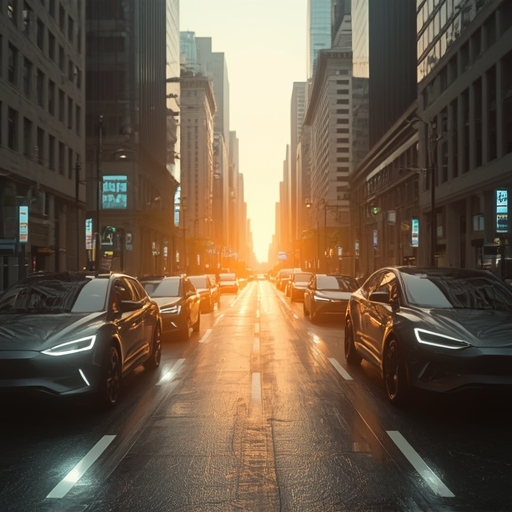
Rivian’s CEO has projected a transformative vision for the future of mobility, asserting that by the year 2030, the notion of purchasing a vehicle devoid of autonomous driving capabilities will appear not merely outdated but virtually unimaginable. In much the same way that cars without airbags are now regarded as unsafe relics of the past, automobiles lacking self-driving technology will likely seem archaic and impractical. This statement reflects more than corporate optimism—it underscores a seismic shift in how the automotive industry, regulators, and consumers perceive transportation.
Over the coming decade, the proliferation of artificial intelligence, machine learning, and advanced sensor integration will redefine the driving experience entirely. Vehicles will evolve from passive tools operated by humans into intelligent systems capable of independent navigation, decision-making, and real-time environmental adaptation. The CEO’s analogy to airbags is particularly revealing: what began as an optional safety enhancement gradually became a universally mandated standard, symbolizing the industry’s broader movement toward safety and technological integration. Autonomous driving systems may well follow the same trajectory, transitioning from novelty to necessity as capabilities mature and public trust solidifies.
The implications of this forecast extend beyond convenience. Fully autonomous vehicles promise not only reduced collision rates and improved traffic efficiency but also new paradigms of mobility for those who are currently unable to drive—such as the elderly or disabled. Furthermore, as automated systems coordinate more effectively than human drivers, highway congestion is expected to diminish, energy consumption may stabilize, and urban landscapes could be reimagined with fewer parking demands and safer pedestrian environments.
Rivian’s broader strategy embodies this technological ethos: electric powertrains combined with self-driving features offer an intersection of sustainability and intelligence. This fusion points toward a future where vehicles communicate seamlessly with infrastructure and one another, creating cohesive networks of mobility rather than isolated, manually controlled units.
Thus, when Rivian’s CEO envisions a world in which owning a non-autonomous car becomes as implausible as driving without airbags, he invites us to acknowledge the accelerating pace of technological normalization. Within just a few years, the boundary between human and machine control may blur to the point where autonomy is not synonymous with luxury or innovation—but with responsibility, safety, and progress. The road ahead, both literally and metaphorically, is one paved with automation, connectivity, and a renewed commitment to redefining what it means to drive—or perhaps, not to drive at all.
Sourse: https://www.businessinsider.com/rivian-ceo-rj-scaringe-non-self-driving-car-inconceivable-2030-2026-2