In today’s shifting financial landscape, this Valentine’s Day serves as a compelling reflection of the broader divide in the modern economy—an economy notably described as ‘K-shaped.’ This term captures the reality that while one segment of society experiences rising prosperity, another often faces stagnation or decline. Such divergence manifests not only in spending power but in the very ways people define love, celebration, and meaningful connection.
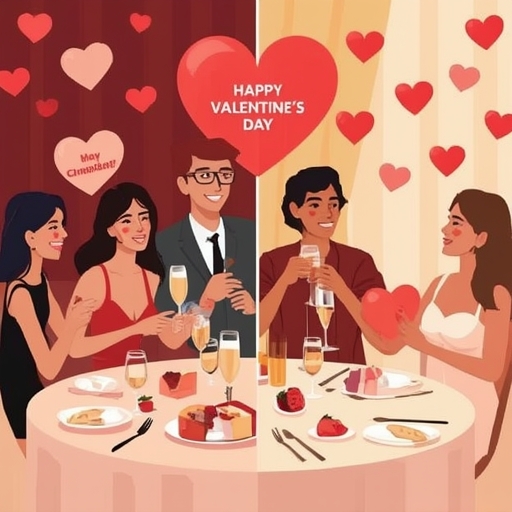
For some, the season of romance becomes an opportunity for indulgence. The upward arm of the K represents those whose financial security allows them to splurge on lavish experiences: exquisite fine dining reservations, designer jewelry, luxury vacations, and exclusive events. Their celebrations often center on experiences that blur the line between affection and affluence, where emotions are expressed through elegant gestures carefully curated to impress and to create memories that align with a lifestyle of abundance. This group, in many ways, sustains the premium market for Valentine’s Day—driving demand for high-end chocolates, custom floral arrangements, and boutique getaways that symbolize both romance and economic confidence.
In contrast, the lower arm of the K tells a different yet equally meaningful story. Here, love unfolds in quieter, more inventive ways as individuals and couples navigate tighter budgets and shifting priorities. Instead of diamond necklaces, there may be handwritten letters, homemade dinners, or creative do-it-yourself tokens of affection. These intimate offerings emphasize emotional depth and sincerity over material display, reflecting resilience and the capacity to find beauty in simplicity. The focus is not on competing with luxury but on redefining what it means to celebrate thoughtfully in uncertain times. Within this space, a new ethos of romance emerges—one that values authenticity, shared experiences, and the irreplaceable warmth of human connection over mere expenditure.
This polarization in celebration styles highlights more than personal taste; it underscores profound socioeconomic trends. The pandemic years intensified disparities across households, leaving some buoyed by remote-work-era savings or stock market gains, while others faced diminishing purchasing power due to inflation and wage inequality. Valentine’s Day, traditionally a nearly universal occasion, now becomes a lens through which to observe these dynamics at a distinctly human level. The holiday continues to thrive, yet its forms have diversified according to access, aspiration, and adaptability.
What unites these disparate realities is the enduring desire for connection—a reminder that, whether expressed through opulent grand gestures or humble, heartfelt creativity, the essence of Valentine’s Day remains the same. It is about recognizing affection, celebrating companionship, and reaffirming that love endures through every economic season. Thus, amid a divided economy, love itself remains the ultimate common ground, transcending status, circumstance, and even the sharp lines of the K-shaped world.
Sourse: https://www.businessinsider.com/valentines-day-spending-k-shaped-economy-affects-consumers-2026-2