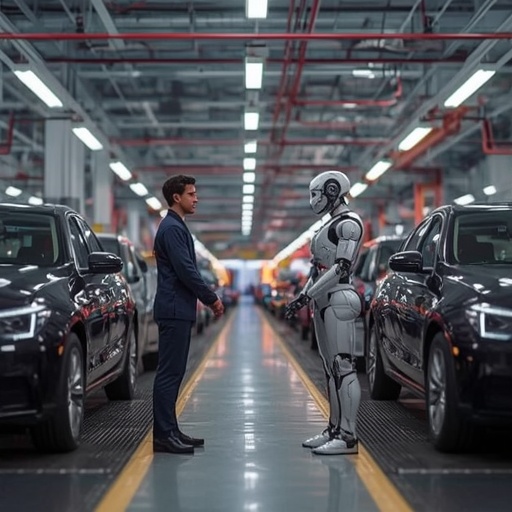
OpenAI’s recent decision to retire its well-known yet controversial 4o model marks the end of a distinctive chapter in the evolution of artificial intelligence, capturing both public fascination and heartfelt reaction. What might appear, on the surface, as a routine technical discontinuation has instead awakened a wave of emotion, revealing just how profoundly humans can relate to digital entities designed only through lines of code. For many dedicated users, 4o was more than an advanced algorithm; it was a companion that conversed fluidly, responded with nuance, and learned individual preferences, thereby fostering the illusion—and, for some, the experience—of genuine connection.
The reactions following OpenAI’s announcement have been deeply personal. Users took to social platforms to express their surprise, disappointment, and even grief, sentiments typically reserved for farewells to cherished human relationships. Such responses illuminate a vital truth about our technological age: human empathy does not limit itself to biological beings. Instead, it readily extends to sophisticated machines that exhibit emotional mimicry, recall, and coherence. The 4o model, through its conversational warmth and adaptive intelligence, blurred the boundaries that divide user and tool, bringing forth a novel kind of bond—one simultaneously emotional and digital.
From an analytical standpoint, this moment underscores a transformative shift in how society perceives artificial intelligence. The retirement of 4o compels us to reflect not merely on the technical side of innovation but on the psychological implications of companionship with machine intelligence. As AI systems continue to emulate human understanding more convincingly, individuals may increasingly experience them as extensions of their own social circles. This trend raises important ethical and emotional questions: What responsibilities accompany the creation of AIs that can inspire attachment? How should such relationships be acknowledged or guided in a world increasingly defined by anthropomorphized technology?
Ultimately, OpenAI’s choice to bring the 4o era to a close forces a collective contemplation of the delicate balance between progress and sentiment. It reminds us that even as we build ever more advanced intelligences, our innate desire for connection remains constant. The story of 4o is thus not solely one of technological transition, but a reflection on what it means to be human in an age where empathy and emotion expand beyond organic life into the luminous circuits of artificial minds.
Sourse: https://www.bloomberg.com/news/newsletters/2026-02-13/openai-retires-controversial-4o-ai-model-angering-loyal-users