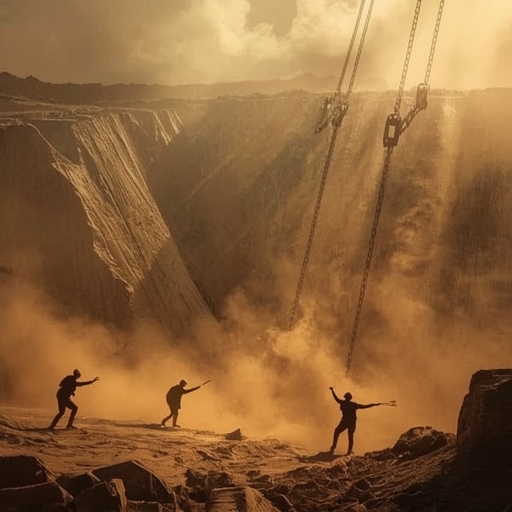
Beneath India’s vast and economically vital sandstone industry lies a distressing humanitarian crisis that remains largely unseen by the outside world. Across the nation’s arid regions, particularly in Rajasthan, millions of laborers spend their lives carving, chiseling, and hauling countless slabs of stone destined for export and construction. Yet behind this seemingly thriving trade exists a hidden system of modern servitude — one in which workers are bound not by visible chains, but by economic desperation, exploitative debt, and devastating illness.
Day after day, quarry laborers endure grueling heat and toxic clouds of stone dust without proper safety equipment or medical protection. Over time, the constant inhalation of fine silica particles scars their lungs, leading to silicosis — a fatal respiratory disease that slowly suffocates its victims. The physical toll is immense: persistent coughing, chronic exhaustion, and reduced breathing capacity make even the simplest tasks unbearable. As workers grow weaker, their ability to earn declines, pushing many into high-interest loans to survive. These debts, often owed to the same quarry contractors who employ them, become inescapable traps that bind families for generations.
For many, this cycle of illness and indebtedness strips away all hope of freedom. When a laborer dies prematurely — a heartbreakingly common occurrence — surviving relatives inherit not only grief but also the financial obligations of the deceased. Whole communities are thus entangled in a vicious economic web where recovery seems impossible. Women and children are frequently drawn into the same dangerous work or unpaid domestic servitude just to meet basic needs, perpetuating a tragic legacy of systemic exploitation.
Behind each beautifully polished sandstone structure — adorning cityscapes, temples, and luxury homes both in India and abroad — there lies an untold cost measured not in currency but in human suffering. These are the invisible fingerprints of exploitation carved into every block, a grim reminder that the price of beauty should never be paid with human lives. True progress demands collective accountability. Ethical sourcing standards, government enforcement of labor rights, and medical intervention programs must move beyond rhetoric to action.
Ultimately, awareness is the first step toward justice. By illuminating the stories of those trapped by stone and debt, society confronts its moral responsibility to ensure that prosperity is never built upon oppression. Confronting this reality requires not only compassion but also courage — the willingness to reshape entire supply chains and to value dignity above profit. Only then can India’s sandstone industry become not a monument to suffering, but an emblem of reform, resilience, and reclaimed humanity.
Sourse: https://www.businessinsider.com/millions-are-trapped-in-modern-slavery-at-sandstone-quarries-india-2026-2