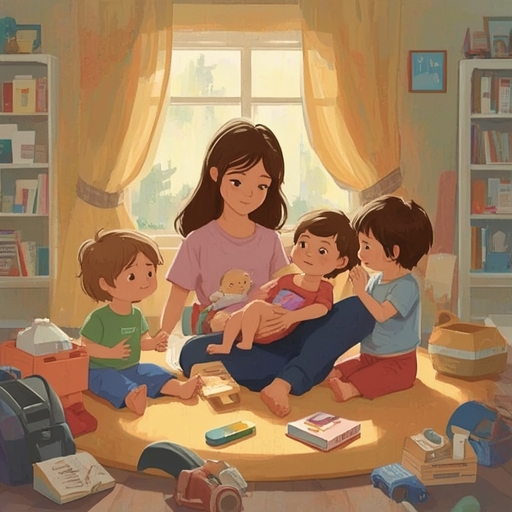
Before my second child was born, I carried a quiet confidence that I had mastered the intricate rhythm of motherhood. I had rules, structure, and a comforting sense of predictability that gave me the illusion of control. My first child thrived in a peaceful, orderly environment—naps happened on time, meals were balanced, and bedtime followed a soothing, ritualistic calm. Each day, though exhausting, felt like a victory shaped by careful planning and unwavering consistency. Then came baby number two, and with her arrival, every carefully arranged piece of that delicate system shifted, tumbled, and rebuilt itself into something far less structured but infinitely more real.
The transition from one child to two felt like stepping into a new dimension of parenting—one where perfection no longer existed and improvisation ruled supreme. My once tidy living room turned into a whirlwind of mismatched socks, half-read storybooks, and an endless chorus of giggles, cries, and squeals. Time transformed from a linear schedule into a fluid force that resisted control; feeding one child while soothing the other demanded a kind of flexibility that no article or parenting manual had prepared me for. What I once perceived as chaos began to reveal its hidden beauty—a kind of harmony that thrived in the unpredictability of daily life.
At first, I grieved the loss of my old ideals. I missed the calm nights, the spotless playroom, and the satisfaction of feeling ‘on top of things.’ But as days turned into weeks, I began to understand that my pursuit of perfection had never been about my children—it had been about me, about my need to feel safe and competent in the face of endless responsibility. When baby number two arrived, she shattered that illusion completely, yet in doing so, she also set me free. I started to measure success not by how smoothly the day ran, but by how much laughter it contained. I learned to accept toys scattered across the floor as symbols of joy, not disorder. I embraced the noise, the mess, and the genuine, unfiltered moments that connected us more deeply than structure ever could.
Now, I no longer strive to be the perfect parent. I strive to be a present one—to find balance in the imbalance, to welcome both the serenity and the storm. My home may look chaotic from the outside, but within that clutter lies warmth, resilience, and unshakable love. Baby number two didn’t bring confusion into my life; she brought perspective. In her tiny hands, she held a simple truth: perfection doesn’t define parenthood—presence does. And with that realization, the chaos transformed into something profoundly beautiful, reminding me that the most meaningful kind of order is the one written by love.
Sourse: https://www.businessinsider.com/having-a-second-child-is-harder-2026-2