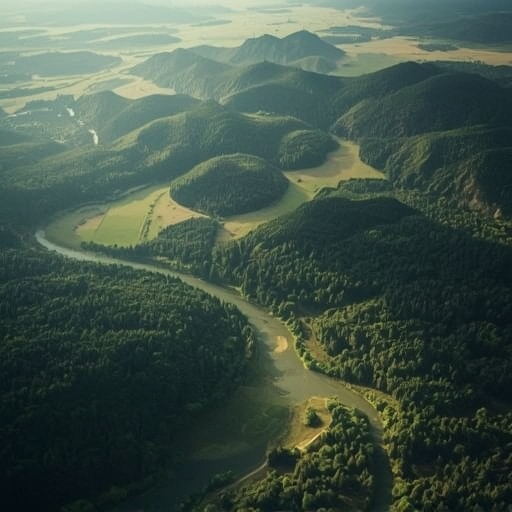
Many Americans assume that the nation’s greatest landowners are the billionaires whose names consistently dominate financial headlines—technological innovators, entertainment moguls, or Wall Street titans. However, the true story of large-scale private land ownership across the United States is far more intricate and often unexpected. The individuals and family dynasties holding the largest tracts of privately owned land are frequently those whose wealth is deeply rooted in agriculture, forestry, ranching, or long-standing family estates, rather than in recently acquired commercial empires.\n\nThese landholders collectively shape vast portions of the American landscape, influencing not only economic enterprises such as timber production, cattle ranching, and agricultural management but also environmental stewardship, conservation practices, and sustainable land use. Some of them have maintained their enormous estates for generations, preserving cultural legacies and rural traditions across thousands — and in some cases, millions — of acres. Others have expanded their holdings through deliberate acquisition strategies focused on natural resources or long-term ecological value.\n\nIt is worth noting that several of the household names often associated with immense financial power, including well-known billionaires from Silicon Valley and the entertainment industry, do not appear among the foremost private landowners in the nation. Their influence may span technology, finance, or global philanthropy, but their physical footprint on America’s terrain remains comparatively modest. The distinction between financial net worth and land-based wealth highlights an underlying truth: control of the land still rests, to a large degree, with those whose families have been tied to it for decades or even centuries.\n\nFrom sprawling cattle ranches in the western plains to timber-rich forests in the Pacific Northwest and the Southeastern United States, these estates represent more than mere property holdings — they embody an enduring connection between people and place. Each acre tells a story of enterprise, persistence, ecological responsibility, and evolving economic relevance. Collectively, these top eleven private landowners serve as silent yet powerful stewards of America’s geographic and environmental identity, proving that influence over the land takes many forms — and often belongs to names far less known than one might expect.
Sourse: https://www.businessinsider.com/biggest-private-landowners-united-states-2026-2026-2