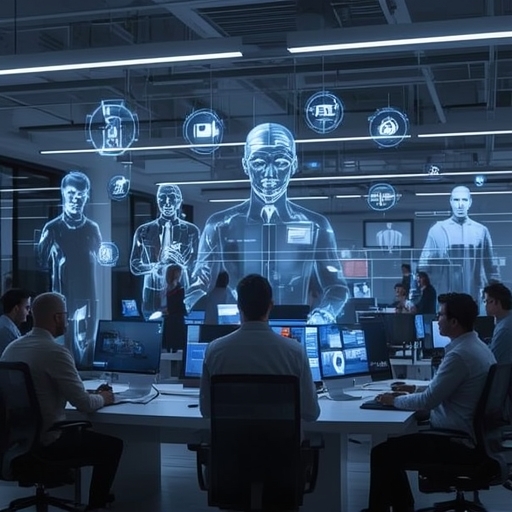
Artificial Intelligence has rapidly evolved from a futuristic concept into a tangible force reshaping workplaces across nearly every industry. While its potential to accelerate productivity and innovation is undeniable, there remains an essential truth that too many neglect — AI is only as powerful as the human intelligence guiding it. As organizations rush to integrate sophisticated AI tools, an increasing number of professionals find themselves at risk of substituting independent thought for algorithmic convenience.
Geetha Rajan, an experienced leader who oversaw AI enablement programs at global organizations like PwC and Freshworks, offers a crucial reminder: technology should amplify human talent, not diminish it. Drawing from her extensive experience in digital transformation and corporate training, she identifies three recurrent missteps professionals make when adopting AI-driven tools, each of which undermines both effectiveness and critical judgment.
**1️⃣ Placing absolute trust in AI-generated outputs.**
Too often, employees accept AI recommendations without verifying data accuracy, checking contextual nuances, or questioning underlying biases that may distort the machine’s conclusions. Although AI excels at detecting patterns and executing repetitive computations, it lacks comprehension of abstract human contexts — ethics, empathy, and situational awareness. For example, a marketing professional relying solely on AI-generated customer analytics might develop strategies that overlook subtle cultural sensitivities. The true challenge lies in balancing automation with critical review: users must examine, interpret, and refine what these tools deliver before making decisions.
**2️⃣ Neglecting human reasoning in pursuit of efficiency.**
The efficiency AI provides can create an illusion of infallibility, leading workers to undervalue their own cognitive capabilities. However, human intuition, creative perspective, and emotional intelligence remain irreplaceable components of problem-solving. In creative industries, for instance, generative AI may produce impressive drafts, but it cannot replicate the depth of human purpose or brand authenticity. As Geetha emphasizes, professionals must treat AI as an intelligent collaborator rather than an intellectual substitute. Thoughtful integration ensures that technology supports originality rather than constraining it.
**3️⃣ Failing to continuously develop relevant skills.**
Perhaps the most overlooked error involves complacency. Because AI can automate many technical tasks, some individuals assume that their existing knowledge is sufficient. In reality, constant upskilling is vital — understanding new toolsets, refining digital literacy, and staying informed about AI ethics are now cornerstones of professional growth. Workers who maintain curiosity and adaptability will not only remain relevant but also retain control over how AI serves their goals instead of dictating them.
Ultimately, Geetha Rajan’s core message transcends mere workplace efficiency. AI can indeed revolutionize the way we operate, but only when guided by sound human judgment, ethical consideration, and lifelong learning. The most successful organizations will be those cultivating environments where technology and human intellect coexist symbiotically — where machines handle optimization, and people provide vision, empathy, and moral clarity.
**The takeaway:** Use AI as a strategic partner rather than a crutch. Let it streamline workflows, enhance creativity, and expand data comprehension, but never surrender your critical thinking in the process. The future of work does not belong solely to artificial intelligence; it belongs to those who master the art of thinking alongside it. #AI #Leadership #FutureOfWork #Upskilling #Innovation
Sourse: https://www.businessinsider.com/ai-mistakes-to-avoid-freshworks-strategy-director-2026-2