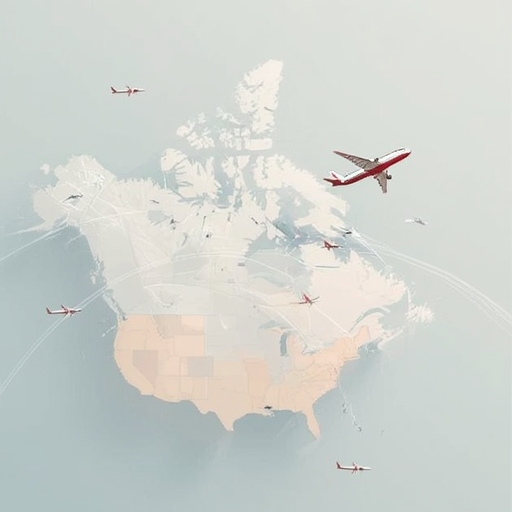
Across Canada’s vast skies, a notable transformation is unfolding in the nation’s aviation landscape as two major carriers—Air Transat and WestJet—make decisive adjustments to their operations between Canada and the United States. Air Transat has announced a complete withdrawal from all U.S. routes for the upcoming summer season, a move that effectively ends its long-standing cross‑border services. Meanwhile, WestJet, another key player in the Canadian airline market, is choosing to scale back a number of its flights to American destinations, streamlining its network in response to shifting demand.
These strategic changes reveal a broader narrative emerging within the travel industry: Canadian demand for leisure and business trips across the southern border has softened noticeably. While the appetite for global exploration remains strong, consumer preferences appear to be evolving, with travelers showing heightened interest in domestic journeys or international destinations beyond the U.S. This decline in southbound enthusiasm could reflect several intertwined factors, such as changing economic conditions, evolving travel habits, the influence of currency fluctuations, or a renewed focus on local exploration and sustainability.
Air Transat’s decision to exit the American market altogether marks a significant pivot for the airline, which has long balanced its international offerings with select U.S. routes targeting both tourism and connecting traffic. By reorienting its network, the company aims to consolidate resources, optimize efficiency, and strengthen performance on routes with higher profitability potential. WestJet’s more measured realignment, reducing but not eliminating cross-border flights, underscores a shared understanding among Canadian carriers that adaptability is essential in a period of unpredictable travel trends and dynamic consumer sentiment.
Industry observers suggest that these developments signal a deeper recalibration of Canada‑U.S. air travel patterns. Airlines are re-evaluating route performance with greater precision, prioritizing destinations where occupancy, yield, and scheduling flexibility align most effectively with traveler behavior. Simultaneously, Canadians may be redirecting their travel aspirations closer to home—exploring the country’s diverse landscapes, regional attractions, and coastal escapes—or seeking broader international adventures to Europe, the Caribbean, and beyond.
Ultimately, this shift in cross-border aviation reflects both a business response and a cultural moment. The skies between Canada and the United States, once among the busiest corridors in North America, now illustrate the complex interplay between market forces and evolving traveler identities. As Air Transat and WestJet adapt their wings to these new winds, the story of Canada’s airline industry enters another chapter—one defined by transformation, resilience, and a careful balancing of opportunity and demand in an ever-changing global travel environment.
Sourse: https://www.businessinsider.com/canadian-airlines-pull-back-from-flights-to-the-us-2026-2