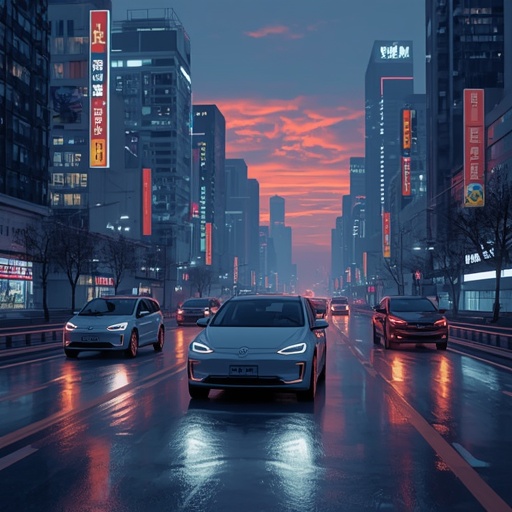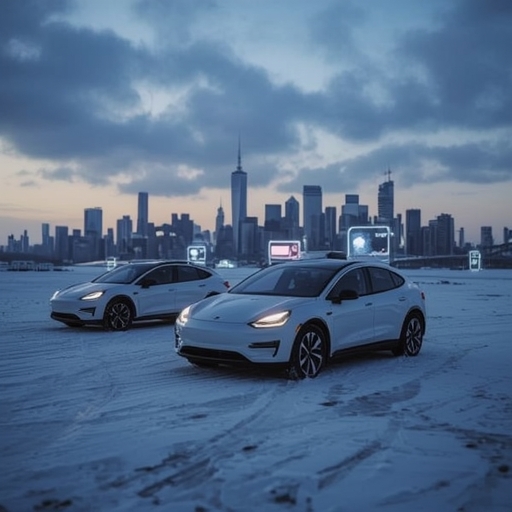
Over the first month of the year, the global market for electric vehicles registered a notable 3% drop in sales compared to the previous January, signaling what many analysts are describing as the arrival of an ‘EV winter.’ This downturn reflects not only shifting consumer sentiment but also tightening financial conditions, reduced subsidies in key regions, and growing competition across the automotive sector. Even industry pioneers such as Tesla, which once stood almost untouchable at the forefront of innovation and demand, are now experiencing the chill of a cooling market.
The phrase ‘EV winter’ captures more than just a temporary dip in numbers—it embodies a moment of reflection for manufacturers, investors, and policymakers alike. After years of explosive growth, the sector is encountering natural headwinds: supply chain constraints are easing but still ripple through production costs, raw material prices for batteries remain volatile, and governments in several major markets are recalibrating incentives that once turbocharged adoption. These factors combined have led to a moderation that might, paradoxically, pave the way for a more stable and mature phase of development.
For consumers, the drop in sales does not necessarily signify waning interest in electrification; rather, it points to a marketplace adjusting after an intense period of expansion. Buyers are increasingly discerning, comparing ranges, charging network reliability, and the total cost of ownership before committing to new models. Likewise, automakers are responding by re-evaluating strategies—rethinking model lineups, refining battery technologies, and exploring more affordable options to sustain long-term growth.
Tesla’s situation illustrates this broader pattern. The company continues to lead in production efficiency and software integration, yet it too faces growing competition from both established giants and agile newcomers from regions such as China and Europe. Market saturation in early-adopter segments and heightened price sensitivity among mainstream consumers are compelling Tesla and its peers to innovate not just in technology but in business models as well.
Still, calling this period a crisis would oversimplify the landscape. Every industry that transforms so profoundly must pass through cycles of consolidation and recalibration. What we are seeing may be less a collapse than a reset—a moment during which companies that adapt intelligently will strengthen their foundations for the next phase of electrification. As infrastructure improves, grid capacity expands, and renewable energy becomes cheaper, the temporary slowdown might ultimately accelerate the sector’s resilience.
The coming quarters will determine whether this ‘EV winter’ develops into a prolonged freeze or gives way to a new surge of momentum. Much will depend on the alignment of policy frameworks, technological breakthroughs in battery efficiency, and the steady restoration of consumer confidence. Regardless of the immediate chill, the shift toward sustainable mobility remains an irreversible global trend. If anything, this period of cooling could mark the quiet, necessary pause before the next powerful burst of electric innovation reshapes transportation once again.
Sourse: https://www.businessinsider.com/elon-musk-tesla-ev-winter-global-sales-2026-2