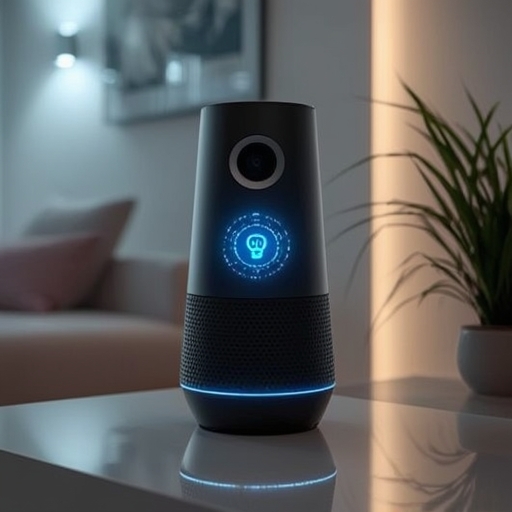
OpenAI is rumored to be venturing into the physical hardware market, marking a pivotal turning point in how artificial intelligence integrates into everyday human environments. Reports suggest that the company’s inaugural device will be a sophisticated smart speaker, blending the auditory sensitivity of a premium sound system with the perceptual capability of a camera. Estimated to retail in the $200–$300 range, this innovative gadget is projected not only to listen to and process voice commands but also to discern visual details from its surrounding space. In other words, it could both *hear* and *see*, enabling a new dimension of interactive AI engagement.
This potential development signifies a significant expansion in OpenAI’s technological vision. Until now, the widespread use of ChatGPT has been largely confined to text-based or digital environments — platforms where users type queries, receive answers, and occasionally use voice interfaces. However, the proposed device could fundamentally transform that dynamic by establishing a multisensory communication channel. Imagine asking ChatGPT for cooking advice while it visually identifies ingredients on your countertop, or requesting a description of a piece of art while the AI interprets the scene before its camera. It moves the system from abstract cognition into the tangible, visually connected world around us.
From a user-experience perspective, this hardware concept hints at a major leap toward naturally embedded AI companions. By merging conversational intelligence with environmental awareness, the device may bridge the gap between smart home utilities and human-like digital assistants. The result could be an interface that feels intuitive, responsive, and deeply integrated into domestic life — a kind of personalized household intelligence capable of perceiving and responding with contextual understanding.
Of course, the idea of an always-seeing, always-listening AI raises pressing questions about privacy, data security, and ethical design. For every enthusiast excited by the possibilities of visual comprehension and contextual memory, there will be skeptics concerned about potential surveillance implications or misuse of sensitive visual data. Striking the right balance between innovation and user trust will therefore be crucial to the success of such a product.
If these reports prove accurate, OpenAI’s transition from software to hardware could reshape the trajectory of AI consumer technology. It would illustrate a bold attempt not merely to enhance virtual interaction but to physically manifest intelligence within our shared environments. Whether this evolution becomes a celebrated breakthrough in computational design or a flashpoint for privacy debate remains to be seen — but either way, it marks an era where AI no longer resides solely behind screens. Instead, it listens, perceives, and perhaps soon, truly understands the world it inhabits.
Sourse: https://www.theverge.com/ai-artificial-intelligence/882077/openai-chatgpt-smart-speaker-camera-glasses-lamp