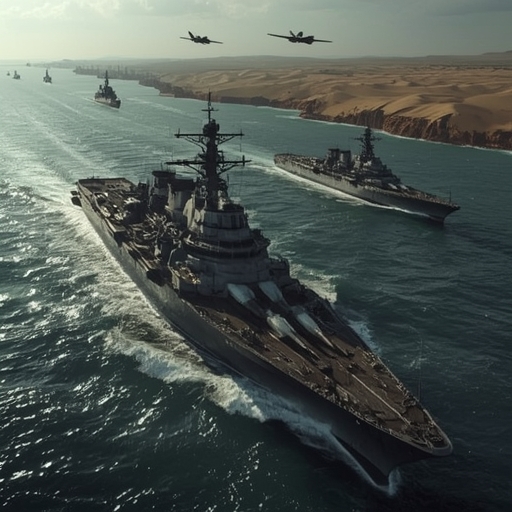
The United States is currently orchestrating one of its most extensive and formidable military operations in the Middle East since the pivotal year of 2003. This sweeping mobilization encompasses a complex network of advanced warships, cutting-edge aircraft, and sophisticated missile defense systems, all strategically converging in close proximity to Iran. The scale and precision of this movement reflect not only a demonstration of military power but also a calculated effort to reaffirm America’s strategic dominance in a region long characterized by volatility and competing global interests.
This renewed military presence serves as a potent signal to both allies and adversaries. It underscores Washington’s commitment to maintaining deterrence and ensuring that its strategic priorities—ranging from maritime security and energy stability to countering potential threats—remain firmly anchored in the region. The deployment is not merely a matter of hardware; it is a deliberate symbol of preparedness and resolve. Each vessel and aircraft embodies decades of technological evolution, aligning with a modern doctrine of rapid mobility, precise engagement, and integrated defense coordination.
The decision to mount the largest deployment in two decades cannot be divorced from the shifting geopolitical landscape. Rising tensions, fluctuating alliances, and the increasingly intricate web of regional rivalries have redefined what it means to project power in the Middle East. By amassing a powerful array of naval and aerial assets, the United States seeks to recalibrate the strategic balance—sending a clear message that it remains both vigilant and deeply involved in shaping outcomes that transcend national borders.
Observers note that this surge represents more than a reactive measure to immediate tensions near Iran. It constitutes a broader, forward-looking initiative aimed at reinforcing long-term stability while reaffirming America’s capacity to respond swiftly to evolving threats. The underlying objective is as much psychological as tactical: to reassure partners of enduring support while signaling to adversaries that escalation will be met with overwhelming force.
In essence, this deployment marks a defining moment in modern defense strategy—a convergence of military might, diplomatic signaling, and geopolitical foresight. As warships carve their paths through international waters and aircraft patrol the skies above contested regions, the world watches the unfolding of a strategic demonstration unparalleled in scale and intent since the early years of the twenty-first century. This moment encapsulates not only a display of technological and tactical excellence but also a reaffirmation of the United States’ enduring role as a stabilizing, albeit assertive, force within the Middle East’s ever-shifting power dynamics.
Sourse: https://www.businessinsider.com/how-the-us-is-preparing-for-war-with-iran-2026-2