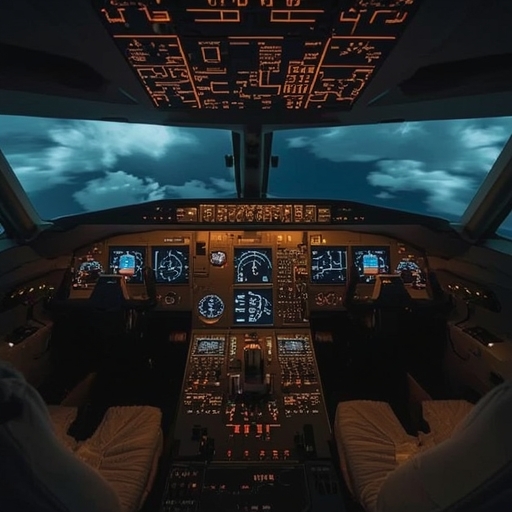
Stepping inside the Airbus A350 flight simulator is not merely an exercise in curiosity—it is a visceral encounter with the extraordinary composure and technical mastery that professional pilots display every single day. The simulator, a near‑perfect replica of the aircraft’s cockpit, replicates with striking realism the extreme conditions that aviators must often navigate: violent turbulence that tosses the jet unpredictably, blinding clouds that obliterate every horizon, and sudden crosswinds that threaten precise alignment on approach. Each scenario is crafted to test skill, judgment, and above all, calm under unrelenting pressure.
What becomes immediately evident within this immersive training environment is the immense cognitive coordination required to sustain both safety and efficiency. The pilot’s world narrows to a symphony of instruments glowing against the darkness—altitude readouts, navigation systems, and flight indicators—each demanding instant interpretation. Yet, amid the storm simulations and the low‑visibility procedures, the defining characteristic is not frantic reaction but deliberate precision. Every motion is measured; every command, though executed in milliseconds, stems from disciplined training and adherence to protocol.
Such realism is not incidental—it is the foundation of modern aviation training. The Airbus A350 simulator provides an authentic replication of pressures experienced in real‑world flight, enabling aviators to prepare for circumstances that, in the sky, allow no rehearsal. When engines hum and the simulated aircraft lurches through turbulence, one begins to understand that piloting is less about controlling a machine and more about managing uncertainty with intellect and stability.
Experiencing this environment firsthand fosters deep respect for the rigorous processes that underpin air travel. Behind every smooth takeoff and gentle landing lies the unseen dedication of crews who have conditioned their reflexes through countless hours in such simulators. Their mastery of teamwork—coordinating communication, delegating tasks, and verifying data—forms a choreography of trust that ensures safety in even the most adverse conditions.
Ultimately, spending time within the Airbus A350 simulator reveals that the art of piloting extends far beyond technical knowledge. It embodies leadership, discipline, and the calm confidence to make decisive actions when every second matters. The experience transforms one’s understanding of flight from a routine marvel of technology into a testament to human precision and resilience—a powerful reminder that beneath the sophistication of aviation lies the unshakable steadiness of those who command the skies.
Sourse: https://www.businessinsider.com/i-flew-airbus-flight-simulator-extreme-turbulence-emergencies-pilot-training-2026-2