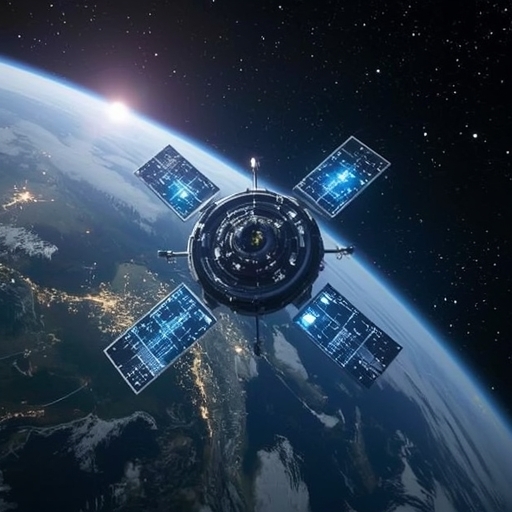
Although the notion of constructing vast data centers in Earth’s orbit might sound like a visionary leap toward a hyper-futuristic age of computing, the reality remains far less celestial. In simple terms, the technology required to make orbital data storage a viable and sustainable solution simply does not yet exist. Even with the extraordinary advances in artificial intelligence, atmospheric physics, and satellite infrastructure, the logistical hurdles of establishing, maintaining, and powering such facilities still outweigh the theoretical benefits they promise.
Envisioning space as a digital haven feels like something from the pages of hard science fiction — satellites glimmering silently while streams of luminous data flow through the vacuum. Yet powering and cooling equipment in the cosmic void present nearly insurmountable engineering challenges. Data centers require stable energy sources, extensive cooling systems, and constant maintenance – all of which demand conditions that are predictable, accessible, and cost-effective. In orbit, every operation would depend on rockets, robotics, or remote manipulation from Earth, leading to astronomical costs and immense risks.
Furthermore, the delay in transmitting information between Earth and an orbital server would undermine one of the fundamental pillars of modern data operations: speed. Our digital economy depends on instantaneous connections and minimal latency, yet signal transmission across vast distances and through atmospheric layers inevitably introduces delay and potential data loss. Even if the dream of space-based processing became technically possible, the financial and environmental investments might not justify the outcome.
Still, the idea itself is not without intellectual allure. Looking forward, one can imagine a time when space energy harvesting—perhaps via solar collection arrays—and advanced autonomous repair systems could transform the balance of feasibility. In that possible future, data centers might drift silently above our atmosphere, powered purely by sunlight, immune to terrestrial constraints such as overheating or land usage demands. But for now, those ambitions reside in the realm of the speculative, awaiting breakthroughs in propulsion, sustainability, and high-bandwidth communication.
The CEO’s recent comments, therefore, serve as a reminder of an essential principle of technological progress: vision must align with readiness. Innovation thrives not merely on imagination but on the disciplined understanding of timing and practicality. While humanity will eventually extend its infrastructure beyond Earth’s gravitational pull, today’s data still needs a firm foundation beneath our feet — a reliable connection, a grounded framework, and an ecosystem of progress that begins here, on solid ground.
Sourse: https://www.businessinsider.com/sam-altman-elon-musk-data-centers-space-timeline-2026-2