Key Takeaways
Ideas, no matter how brilliant or groundbreaking, acquire real and lasting value only when they are presented in an organized manner and pursued with both speed and unwavering discipline. Trust and meaningful relationships, built upon authenticity and mutual respect, elevate performance to extraordinary levels—often surpassing what can be achieved by strategy or raw talent alone.
Albert Einstein once remarked that when we look deeply into nature, we gain a clearer and more complete understanding of the world around us. This observation is profoundly true, especially when we consider leadership and the art of constructing high-performing teams. Nature, after all, functions as an extraordinarily elaborate system composed of countless interconnected organisms and processes, each performing a unique role. Yet, together, they create equilibrium and purpose—a dynamic that mirrors how a successful organization operates. Within a company, individuals, like components in an ecosystem, thrive through collaboration, structure, and adaptability, forming a collective whole that is greater than the sum of its parts.
When we speak about high-performing teams, we refer to groups marked by deliberate balance and intentional design. Building such a team requires evaluating multiple dimensions—dedication, integrity, expertise, accountability, consistency, and an unrelenting pursuit of excellence. Each factor contributes to a cohesive culture where competence and character reinforce one another.
Several months ago, I came across a podcast hosted by Andrew Bustamante, a former covert intelligence officer for the CIA who has since transitioned into a prominent public communicator. In the episode, Bustamante explained an internal framework used by the CIA for understanding team dynamics, known as The Four Temperaments. This conceptual model classifies individuals into four symbolic archetypes—Lions, Foxes, Cheetahs, and Bears—each representing a distinct strength essential to any elite, high-functioning team. Just as an ecosystem relies on diversity for balance, these four archetypes reflect the multifaceted skill sets and personalities that enable an organization to operate at peak capacity.
Let us explore each archetype in greater depth to reveal how every one of them uniquely contributes to the growth, endurance, and effectiveness of a high-performing team.
Lions: The Organizers
Lions, often called the monarchs of the animal kingdom, embody a commanding sense of power, confidence, and clarity. Within the framework of team performance, the lion symbolizes leadership—the ability to impose structure amid chaos and transform ambiguity into actionable order. In practice, the lion archetype manifests in individuals who instinctively manage operations, define priorities, and coordinate collective efforts. A true leader organizes not through domination but through vision, assembling disparate pieces into a coherent strategy that enables progress. They remove distractions, prioritize objectives, and allocate resources efficiently to ensure the team’s energy flows toward what matters most. Organization, in this sense, becomes the backbone of productivity. It’s not simply about control; it’s about creating the conditions where every contributor can perform at their best.
Foxes: The Innovators
In contrast to the lion’s commanding order, the fox thrives through intellect, creativity, and strategic adaptability. Known in the natural world for their cleverness and resourcefulness, foxes represent the archetype of the ideator—the person whose imagination fuels innovation. Within a team, this individual continually generates fresh insights and reimagines traditional approaches, ensuring that the group never stagnates or succumbs to routine. A fox-like member excels in lateral thinking, producing ideas that challenge conventions and open new pathways to solve complex problems.
Though some teams assign this creative responsibility to specific roles, the most effective organizations cultivate a culture in which the entire group participates in idea generation. Brainstorming sessions, open dialogues, and nonjudgmental sharing platforms allow diverse voices to contribute equally. When people feel free to express unrefined concepts without fear of criticism, a natural selection of ideas occurs—where the best, most valuable innovations rise to prominence. Cultures that empower such participation evolve faster and outpace competitors because their intellectual ecosystem remains alive and self-renewing.
Cheetahs: The Executors
While planning and creativity are vital, they hold little value without action. Cheetahs—renowned as the fastest terrestrial animals—embody precision, concentration, and speed. A cheetah commits fully to its pursuit, expending explosive energy in brief yet effective bursts. Within high-performing teams, this archetype represents the doers—the individuals who convert vision into progress. They bridge the gap between intention and outcome, ensuring that even the most sophisticated strategies don’t remain abstract.
Execution, however, requires more than enthusiasm—it demands discipline, resources, and enabling environments. An effective executor must be empowered with the right tools and systems to act decisively. When such individuals are supported properly, their contribution becomes transformative. They sustain momentum, transform strategy into visible achievement, and ignite a culture of accountability. Without them, even the brightest ideas and best-laid plans would remain theoretical sketches, never materializing into tangible success.
Bears: The Relationship Builders
Finally, we arrive at the bears—symbols of reliability, protection, and connection. In professional ecosystems, bears represent those who nurture trust and foster genuine human relationships, both within the team and beyond organizational boundaries. Relationship-building is not a superficial skill; it is a strategic function that amplifies opportunity. Strong relationships create bridges to vital resources—knowledge, capital, and influence—that might otherwise remain inaccessible.
Leaders and team members who embody the bear temperament invest deliberate effort into cultivating mutual respect and understanding. They nurture trust through open communication, empathy, and consistent integrity. Just as a bear safeguards its territory and kin, a relational leader cultivates an environment of psychological safety—a culture in which people feel valued and heard. Within such an environment, collaboration flows naturally, misunderstandings are reduced, and performance flourishes.
Trust and communication form the underlying tissue that connects every great team’s structure. When individuals can rely on one another and communicate transparently, they align intuitively around shared goals. Clarity of purpose replaces confusion, enabling collective intelligence to surface.
Integrating the Four
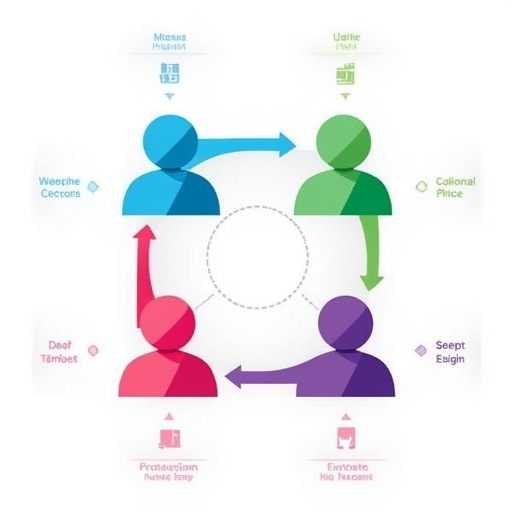
For a team to truly perform at its highest potential, each of the Four Temperaments—organization, innovation, execution, and relationship-building—must coexist in balanced proportion. Like the intricate ecosystems of nature, success emerges not from the dominance of one element but from the harmony of all. The lion gives direction, the fox fuels imagination, the cheetah accelerates movement, and the bear ensures cohesion. Together, they form a resilient, adaptive unit capable of sustained excellence.
Key Takeaways (Revisited)
Ideas generate value only through clarity, structure, and disciplined execution. Moreover, trust and meaningful relationships elevate both teams and leaders beyond the limits of pure intelligence or strategy. By observing nature’s intricate interplay of roles and systems, we are reminded that the principles governing high-performing teams are universal: organization, creativity, action, and connection—each indispensable, and together, unstoppable.
Sourse: https://www.entrepreneur.com/growing-a-business/the-cia-says-high-performing-teams-need-these-four-roles/502532