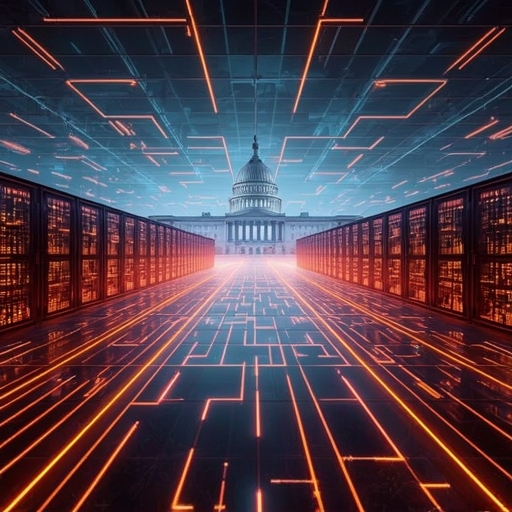
In a bold and strategically charged statement, President Donald Trump has urged the world’s leading technology corporations to shoulder a greater share of responsibility for sustaining the artificial intelligence revolution that they themselves are propelling. He specifically called on these companies to energize and finance their own AI ambitions, asserting that they must also bear a higher cost for the vast amounts of electricity consumed by the massive data centers that power their algorithms.
This directive, though seemingly straightforward, carries substantial implications for the technological, economic, and political dimensions of modern innovation. By insisting that corporations fund their own energy infrastructure, Trump is challenging the longstanding dependence of Silicon Valley on subsidized or externally managed power supplies. Such a request introduces a new paradigm of accountability — one in which the pursuit of advanced AI systems would no longer be isolated from the environmental and logistical realities that sustain them.
Data centers — the colossal digital complexes at the heart of today’s artificial intelligence ecosystem — require extraordinary amounts of electricity. These facilities not only house the computational machinery that trains and operates AI models but also consume immense energy to maintain optimal cooling and operational stability. Trump’s suggestion that technology companies pay more for such energy could therefore encourage a reevaluation of efficiency practices and could even accelerate innovation in renewable or self-sustaining power sources designed specifically for AI infrastructure.
From a policy standpoint, this initiative signals a shift toward coupling technological advancement with greater economic and ecological responsibility. It implies that the benefits of AI innovation — from automation and consumer intelligence to enhanced national productivity — must be balanced with an awareness of the physical costs of their creation. The proposal could also spark new debates about energy regulation, sustainability standards, and the role of private enterprise in upholding national resource integrity amid the accelerating AI arms race.
For the tech giants shaping the future — names synonymous with global influence — this message serves as both an opportunity and a challenge. It encourages these companies to demonstrate leadership not just in software engineering and data science but in the responsible management of the infrastructural foundations upon which their power depends. Whether this will lead to a renaissance of energy-conscious innovation or a contentious realignment between industry and government remains to be seen. Yet one truth stands clear: as artificial intelligence continues its meteoric rise, its success will increasingly be judged not only by its algorithmic brilliance but also by the sustainability and responsibility of the energy that fuels it.
Sourse: https://www.businessinsider.com/trump-tech-firms-pledge-produce-electricity-data-center-power-pay-2026-2