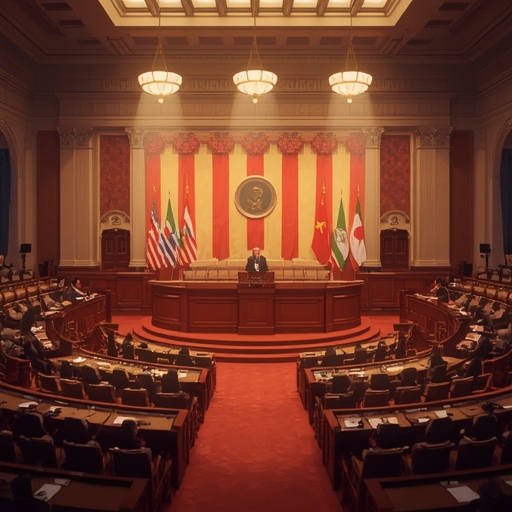
The most recent State of the Union address stood out both for its extraordinary length and for the intensity with which it tackled a series of pressing national issues. Over the course of the speech, the President laid out an ambitious vision centered on three interlocking themes: sustaining robust economic growth, implementing comprehensive reforms at the border, and pursuing assertive yet carefully calculated trade policies. Each of these focal points was developed in deliberate detail, demonstrating not only a commitment to immediate results but also to the long-term strategic positioning of the country on the global stage.
Regarding the economy, the President underscored the importance of maintaining a climate conducive to innovation, entrepreneurship, and job creation. This was accomplished through a discussion of targeted fiscal initiatives, including tax reforms designed to stimulate private investment, infrastructure programs aimed at modernizing critical sectors, and education policies that would better prepare the workforce for the technical demands of rapidly evolving industries. The overall message was one of optimism—that sustained growth depends on empowering both individuals and institutions to contribute creatively to national prosperity.
The segment on border policy revealed a dual emphasis on humanitarian considerations and national security. The administration’s strategy, as outlined in the address, blends enhanced border enforcement with reforms that aim to create clearer, more efficient immigration processes. The President highlighted the moral responsibility to ensure humane treatment of migrants while emphasizing that national borders must remain secure and well managed. This nuanced approach reflects the attempt to reconcile compassion with the imperative of order—an equilibrium that has eluded past administrations but remains central to the country’s identity and stability.
Trade policy, the third cornerstone of the address, was presented as a key instrument for strengthening both domestic productivity and international partnerships. The President advocated for trade agreements that prioritize fair competition, protect American industries, and open new and equitable markets. By emphasizing reciprocal benefits and the need for mutual accountability among global trading partners, the speech outlined a diplomatic strategy that merges economic pragmatism with national pride.
Taken together, these themes portray a vision of the nation’s future characterized by sustained growth, secure borders, and strong international engagement. The State of the Union thus functioned not merely as a review of policies but as a strategic manifesto—one that seeks to weave together economic vitality, social responsibility, and global leadership into a single cohesive framework for governance. The address challenged citizens and policymakers alike to think beyond partisanship and to imagine a country united by ambition, resilience, and a shared commitment to progress.
Sourse: https://www.businessinsider.com/biggest-moments-from-donald-trumps-state-of-the-union-2026-2