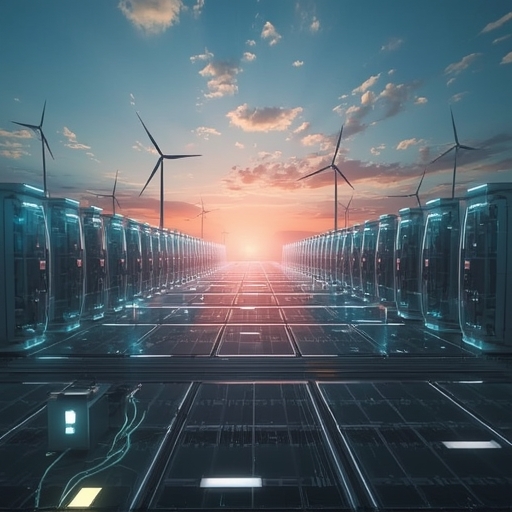
Across the global technology landscape, a profound transformation is quietly taking shape—one that reaches far beyond software, devices, or network innovation. Major technology companies, often referred to collectively as Big Tech, are now venturing decisively into the energy sector. As the demands of artificial intelligence, cloud computing, and data-driven ecosystems accelerate, the colossal power requirements of data centers have become impossible to ignore. In response, corporations are exploring how to generate, manage, and sustain their own electricity rather than relying solely on conventional utilities.
This shift represents much more than a move toward operational self-sufficiency; it signals a historical redefinition of how technology corporations perceive their role in the global energy matrix. By developing private energy grids or investing directly in renewable power installations such as solar fields and wind farms, these companies are marrying computational innovation with environmental stewardship. For example, large-scale photovoltaic projects or offshore wind initiatives are increasingly being integrated into data center networks, ensuring that digital infrastructure runs on cleaner, independent sources.
At a deeper strategic level, this evolution reflects both pragmatic necessity and visionary ambition. Power independence provides resilience against grid instability and fluctuating energy markets, which are critical factors for enterprises that must ensure uninterrupted connectivity and performance. Simultaneously, by embracing sustainable energy production, technology giants aim to mitigate their environmental impact, aligning corporate objectives with global climate goals. It is a dual pursuit of efficiency and responsibility—a model where business continuity and ecological ethics are interwoven.
The implications extend even further. As these corporations refine advanced storage solutions, deploy smart microgrids, and experiment with next-generation technologies such as hydrogen fuel systems or closed-loop energy management, they begin to blur the boundary between information science and industrial infrastructure. What once defined the frontier of computing is now becoming inseparable from the science of energy. This fusion introduces new opportunities for collaboration between sectors that, until recently, operated in isolation.
In essence, Big Tech’s journey into energy generation marks the dawn of a new industrial paradigm. It is an age in which data centers may one day function as self-contained ecosystems—drawing, storing, and distributing power with the same precision that they process information. As private energy projects multiply across continents, the future of computing is gradually detaching from dependence on centralized grids. Instead, it is being powered by a vision of autonomy, innovation, and ecological harmony.
For consumers, policymakers, and scientists alike, this evolution invites reflection on what the next decade will bring: networks that are not only intelligent and adaptive but also clean, renewable, and resilient. The ongoing revolution in energy generation may ultimately reshape how humanity conceives not just technology or power, but the intricate relationship between them—an intersection where sustainability and digital progress converge to define the foundation of tomorrow’s world.
Sourse: https://www.businessinsider.com/data-centers-on-site-power-plants-trump-announces-2026-2