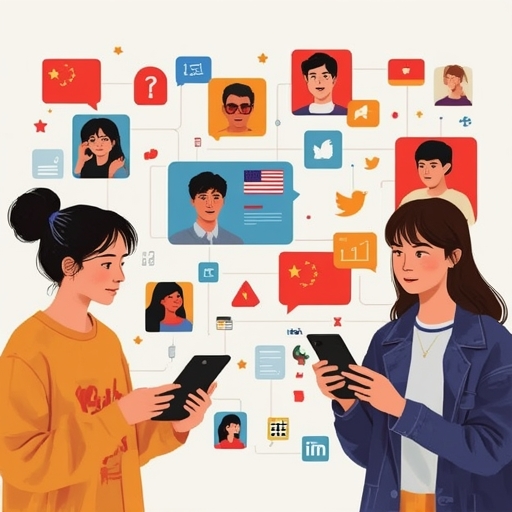
The phenomenon known as ‘Chinamaxxing’ has recently emerged as one of the most compelling cultural trends to circulate across TikTok and other major social media platforms. At its core, the movement consists of American users immersing themselves in various facets of Chinese culture—ranging from language, cuisine, aesthetics, and design to deeper explorations of Chinese philosophy and modern technological advancement. What initially began as a playful form of online curiosity has quickly evolved into an intricate digital exchange that reflects the dynamic, often unpredictable ways in which global cultures now influence and reinterpret one another in real time.
On TikTok, creators participating in the Chinamaxxing trend can be seen showcasing traditional fashion pieces, experimenting with Chinese-inspired interior design, or discussing topics like Chinese innovation, education, and entertainment. Many express admiration for China’s rapid modernization and unique cultural confidence. These videos, often set to upbeat music or humorous commentary, blend irony with genuine appreciation, highlighting the blurred boundaries between parody and respect that so often characterize modern internet culture.
Meanwhile, Chinese netizens observing from platforms such as Weibo or Xiaohongshu have reacted with a fascinating mix of emotions: national pride, amusement, and a touch of skepticism. On one hand, many express delight at seeing international audiences engage with Chinese culture beyond stereotypes, interpreting the trend as a subtle recognition of China’s growing global influence. On the other, some perceive it as a superficial or overly performative wave—an online fad that commodifies cultural symbols rather than fostering deeper understanding.
Beneath the surface humor and occasional awkwardness, however, the Chinamaxxing craze reveals something larger about the digital age: how shared spaces on the internet accelerate the exchange of cultural identity. In a world where algorithms routinely bring distant communities into contact, trends like this one demonstrate how people might use humor, fashion, and aesthetics as accessible gateways to explore unfamiliar values and perspectives. What once required slow cultural diplomacy can now occur instantly through viral content, for better or worse.
To brands, educators, and global institutions navigating this interconnected environment, Chinamaxxing serves as a reminder that cross‑cultural engagement cannot be separated from entertainment or self‑expression. Online participation today is rarely about consumption alone—it is about visibility, aspiration, and belonging within a sprawling digital ecosystem. Understanding this interplay between creativity and cultural translation may be essential for those seeking to participate in authentic global conversations rather than simply market to them.
Ultimately, whether viewed as a sincere form of cultural appreciation or a fleeting example of internet irony, America’s Chinamaxxing moment underscores an unmistakable truth: cultural identity in the twenty‑first century is fluid, performative, and co‑created. Borders still exist, but on the screens of TikTok and beyond, they have become permeable spaces where imitation, admiration, and re‑invention coexist. This cross‑cultural dialogue—sometimes awkward, sometimes inspiring—reveals not division but the evolving desire of a connected world to understand itself through the eyes of another.
Sourse: https://www.businessinsider.com/china-reaction-chinamaxxing-trend-america-rednote-2026-2