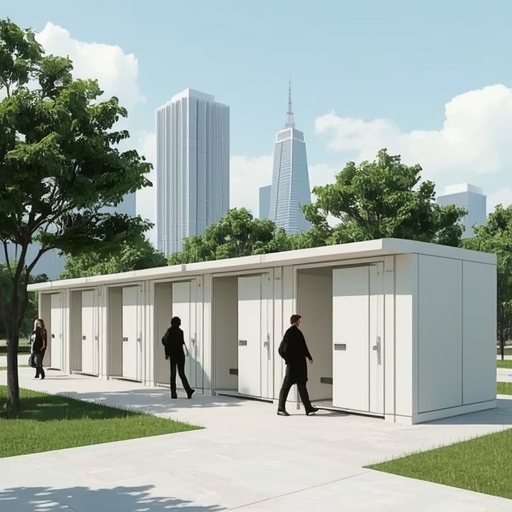
In every city, the ability to access a clean, safe public restroom is an unassuming yet fundamental indicator of how effectively a society cares for its residents and visitors. Yet in the United States, constructing such a basic amenity has somehow become an extraordinarily complex endeavor—one that often feels more daunting than erecting gleaming high-rises that transform skylines. The struggle to build a single functioning public bathroom reveals a deeper, systemic challenge within the nation’s infrastructure: bureaucratic inertia, fragmented regulatory oversight, and outdated procurement processes that inflate costs and stretch timelines to absurd proportions.
Public bathrooms are not luxuries; they are essential components of civic life and urban health. They serve parents with young children, elderly citizens, tourists exploring unfamiliar neighborhoods, and countless workers whose jobs keep cities running. However, even as communities acknowledge these realities, the process of designing and implementing public facilities remains tangled in red tape. Permits take months—or years—to secure. Stakeholders from multiple departments debate designs, locations, and budgets. Contractors face logistical hurdles that drive costs into the hundreds of thousands of dollars per unit. Meanwhile, the absence of these facilities disproportionately affects those without reliable access to private restrooms, such as the unhoused, delivery drivers, and individuals with medical conditions.
This persistent inability to deliver something so elemental underscores a fundamental flaw within America’s infrastructure culture. Whereas skyscrapers, luxury condominiums, and large-scale commercial projects often race toward completion through private capital and coordinated authority, publicly funded sanitation projects languish. The disparity exposes how institutional fragmentation and the politicization of local governance have eroded trust and efficiency. When civic projects founder before they even break ground, the broader public begins to view government not as a partner in progress but as a cumbersome obstacle.
Rethinking how cities approach these projects requires more than budgetary reform—it demands an overhaul of the mindset guiding urban design and governance. Solutions may come from modular architecture, streamlined permitting, and cross-departmental collaboration that prioritizes outcomes over endless deliberation. Some cities are experimenting with prefabricated restroom units or public-private partnerships that reduce both cost and delay. These approaches not only make financial sense but also signal a willingness to innovate and prioritize dignity in public life.
Ultimately, the quest to build a public bathroom encapsulates the larger narrative of American infrastructure today: the paradox of immense capability hampered by systemic inefficiency. If constructing something as small and essential as a restroom requires years of discussion and millions in spending, one must ask what that says about the country’s capacity to tackle broader challenges—from transportation reform to climate resilience. Building equitable, functional cities begins by addressing such everyday details. The path forward lies not only in grand visions but in restoring the practical competence to meet basic human needs with the respect and urgency they deserve.
Sourse: https://www.businessinsider.com/mamdani-new-york-city-public-toilets-costs-delays-2026-2