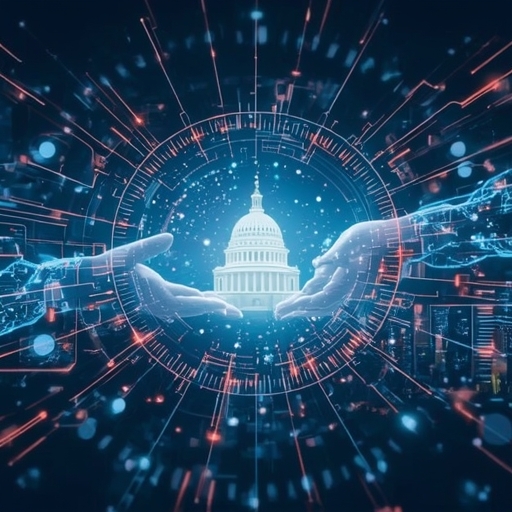
The recent partnership forged between OpenAI and the United States Department of Defense has ignited a multifaceted debate that extends well beyond the realm of technology itself. This collaboration, while emblematic of cutting-edge innovation, raises pressing ethical and philosophical questions about the convergence of artificial intelligence with matters of national security, surveillance, and governmental oversight. As private technology companies become increasingly intertwined with defense-related projects, the boundaries between progressive discovery and potential misuse of AI systems grow ever more indistinct.
At the heart of the debate lies a profound dilemma: how should society reconcile the pursuit of technological advancement with the preservation of transparency, privacy, and public trust? OpenAI’s involvement with the Pentagon not only exposes the growing dependency of governments on AI to manage complex defense challenges, but also forces the global community to confront whether moral frameworks within the technology sector are sufficiently robust to prevent harmful applications of these tools. What was once the exclusive domain of science fiction—autonomous decision-making algorithms intertwined with state power—has now become a present reality that demands urgent reflection.
For advocates of technological progress, such collaborations can be framed as a pragmatic necessity. They argue that the evolution of AI is integral to maintaining national security and economic leadership in an increasingly competitive global landscape. AI-enhanced analysis, data interpretation, and automated systems have the potential to dramatically improve efficiency and responsiveness in defense operations. Yet, alongside this promise, critics caution that without stringent ethical governance and full transparency, even well-intentioned innovation might inadvertently expand the mechanisms of surveillance and erode civil liberties.
The question, therefore, is not merely whether companies like OpenAI should cooperate with governmental institutions, but under what terms such cooperation should unfold. Transparent frameworks, strict accountability measures, and public dialogue are indispensable elements required to ensure that progress does not outpace moral responsibility. As technology continues to evolve faster than regulatory systems can adapt, both private firms and public agencies must commit to a shared ethos of responsibility, guided by principles that prioritize human dignity, privacy, and ethical stewardship.
Ultimately, OpenAI’s partnership with the Pentagon represents a pivotal moment in the broader narrative of artificial intelligence governance. It challenges the global community to define where the ethical boundaries of technological power should lie and compels industry leaders, policymakers, and citizens alike to engage in a nuanced conversation about the future of innovation. The intersection of AI and defense is no longer a distant hypothesis—it is a defining feature of our age, and the way humanity navigates this terrain will shape the moral character of technological progress for generations to come.
Sourse: https://www.theverge.com/ai-artificial-intelligence/887309/openai-anthropic-dod-military-pentagon-contract-sam-altman-hegseth