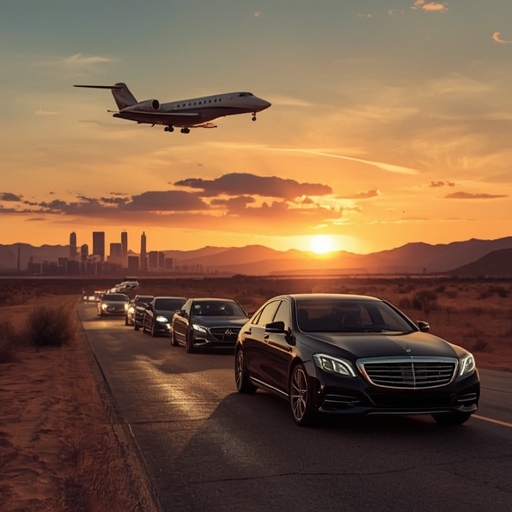
As unrest intensifies across several regions of the Middle East, an unexpected industry has begun to thrive — one that caters to the anxieties of the extremely wealthy. In the face of mounting geopolitical tension, affluent residents and business magnates based in financial powerhouses such as Dubai, Doha, and Abu Dhabi are reportedly spending staggering amounts, often exceeding two hundred thousand U.S. dollars, to secure their personal escape routes. These exit strategies, typically comprising privately chartered jets, discreet cross-border convoys, and high-security transportation services, symbolize far more than simple luxury; they represent the monetization of safety itself.
The demand for rapid and exclusive evacuation is a direct reflection of how deeply economic stratification shapes not only lifestyles but also survival itself during periods of instability. While ordinary citizens brace for uncertainty — constrained by border restrictions, flight cancellations, and political fears — the ultra-wealthy are leveraging immense financial resources to purchase mobility and protection. In these moments, wealth becomes an instrument of autonomy, granting the privileged few the ability to transcend the limitations that others must endure. This widening gap underscores a sobering reality: in times of crisis, freedom and safety remain privileges reserved for those who can afford the price tag attached to them.
Within this unfolding pattern lies a quieter narrative of moral and human complexity. For those capable of paying such exorbitant fees, the decision to depart may not stem purely from self-interest; it often emerges from an instinctual drive toward survival, an effort to protect families, assets, and futures. Yet each high-priced departure accentuates the inequities that define global society — where the notion of security has become transactional, quantified in invoices and jet fuel receipts. Private aviation companies, luxury transport operators, and concierge security firms are now witnessing unprecedented demand, transforming fear into a new form of economic opportunity.
The spectacle of caravans of bulletproof SUVs rushing toward private airfields as the sun sets over desert skylines encapsulates the drama of the present moment: opulence contrasted against volatility, flight measured not only in altitude but in privilege. These scenes, cinematic in composition yet painfully real in implication, evoke a crucial question — can monetary power truly purchase peace of mind, or does it merely delay the confrontation with an uncertain world? Across the Middle East, the $200K escape has become both a symbol and a metaphor, illuminating how the balance between wealth and vulnerability defines our contemporary age of global unrest.
Sourse: https://www.businessinsider.com/wealthy-people-dubai-abu-dhabi-chartering-planes-evacuate-middle-east-2026-3