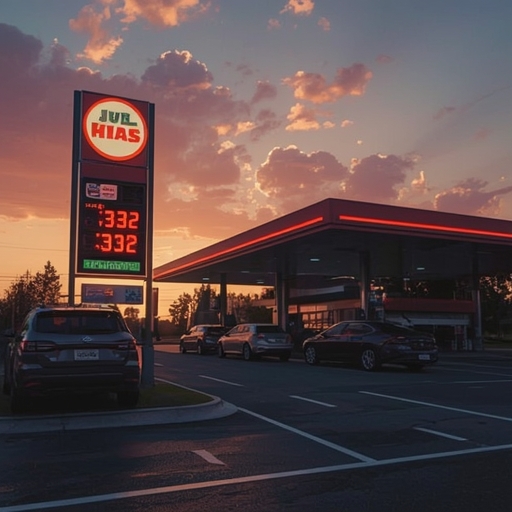
Across the United States, gasoline prices have once again surged, reaching an average of $3.32 per gallon—the highest level recorded since August 2024. This new price milestone has captured national attention, stirring widespread discussion among consumers, economists, and policymakers alike. For everyday drivers, the increase translates into a more noticeable strain on weekly budgets, while businesses that rely heavily on transportation and logistics are being forced to navigate higher operational expenses. The situation highlights how fuel costs remain an enduring barometer of broader economic sentiment, influencing not only inflation rates but also the cost of goods and services throughout the supply chain.
Despite the mounting public concern, current leadership has responded with calm acknowledgment, offering a simple yet telling statement: “If they rise, they rise.” This remark underscores a stance of measured acceptance rather than alarm, suggesting confidence in the economy’s ability to adapt and stabilize over time. Yet behind that composure lies a complex interplay of factors contributing to the rise—seasonal transportation demand, fluctuating global oil production levels, and regional refinery maintenance schedules, all of which subtly but powerfully shape the final price visible at every gas station marquee.
For consumers, the impact of this price climb extends well beyond the gas pump. Commuters in sprawling metropolitan areas may begin reassessing their daily transportation choices, exploring carpooling, public transit, or even electric alternatives. Families stretching every dollar face the challenge of rebalancing household budgets to absorb the higher cost of travel, groceries, and utility bills—all of which are indirectly affected by energy price movements. Similarly, businesses that depend on ground shipping and delivery services are contending with narrower profit margins, prompting some to reconsider operational efficiencies or adjust pricing models.
Economists continue to monitor this trend closely, analyzing whether the surge represents a short-lived spike or the early signs of a more persistent upward trajectory. Historical patterns show that such increases can fuel inflationary pressures, influencing interest rate decisions and consumer spending behavior across multiple sectors. Still, the measured tone from leadership suggests a belief that current market mechanisms, paired with ongoing energy diversification efforts, may temper volatility in the months ahead.
As Americans pause at the pump and glance at the glowing digital displays reading $3.32 per gallon, they are not merely witnessing a number—they are observing a reflection of economic resilience, global interconnectedness, and the constant negotiation between supply, demand, and optimism. Whether this moment proves to be a temporary fluctuation or the start of a longer-term pattern, one thing remains clear: gas prices continue to symbolize the pulse of the nation’s economy, influencing both perception and policy in ways that reach far beyond the asphalt of the local fuel station.
Sourse: https://www.businessinsider.com/us-gas-prices-climb-highest-trumps-term-oil-iran-2026-3