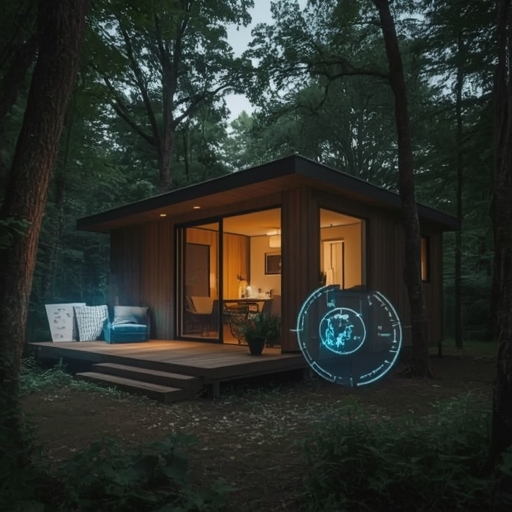
In a remarkable blend of creativity, perseverance, and cutting-edge technology, a couple managed to design and construct the home of their dreams—an intimate yet exquisitely planned tiny house—within a mere seven months. What makes their achievement particularly noteworthy is that they accomplished it with significant assistance from ChatGPT, an artificial intelligence platform best known for its conversational and analytical capabilities. Although the couple had limited construction experience, they leveraged the AI’s capacity for organization, analysis, and creative ideation to overcome the numerous challenges typical of first-time builders.
ChatGPT became a kind of digital project partner, helping them map out their design priorities, fine-tune dimensions, evaluate material options, and anticipate technical issues long before actual work began. Instead of spending endless weeks researching or second-guessing every structural and design decision, they found that the AI could synthesize complex information into understandable, actionable recommendations—dramatically shortening their planning timeline. For instance, when faced with dozens of possible floor plan arrangements, ChatGPT offered logical comparisons and suggested criteria for selecting the most space-efficient design, saving both time and frustration.
However, their story is not merely one of machines taking charge. Despite the advanced support that AI provided, the couple remained deeply involved in all creative and practical aspects of the build. Friends and family acted as sounding boards, offering advice that no algorithm could replace—insight born from real experience, aesthetic sensitivity, and emotional understanding. Their contributions illuminated areas that required a human touch: the feel of materials, the warmth of lighting, and the subtle nuances of livability that pure data cannot always capture.
The process revealed an important balance. Artificial intelligence proved invaluable for its precision, speed, and ability to organize complex ideas, yet it also made clear that true innovation flourishes at the intersection of digital reasoning and human empathy. The couple’s journey demonstrates that when technology is approached as a collaborative tool rather than a replacement for human judgment, it becomes a means to amplify creativity rather than stifle it.
Ultimately, their finished home stands as a living testament to this harmony. Every wall and window embodies countless hours of conversation between human intuition and artificial intellect. It is not just a functional dwelling but also a symbolic expression of what the future of homebuilding—and perhaps all creative work—may look like: technology enhancing rather than diminishing the individuality of its creators. Their success underscores that progress in design and construction belongs not solely to the digital realm or to human skill alone, but to the powerful synergy of both working side by side.
Sourse: https://www.businessinsider.com/built-tiny-home-house-using-chatgpt-ai-useful-guidance-was-2026-3