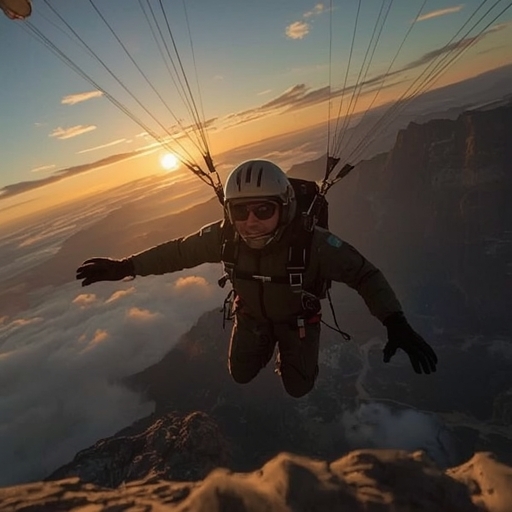
From the moment a pilot first dreams of taking flight, the unseen reality of survival training already looms on the horizon as a vital and indispensable aspect of aviation preparedness. Before ever gripping the controls of a real aircraft, members of the U.S. aircrew are required to undergo an exceptionally demanding series of programs designed to fortify both mind and body. These exercises, spanning from complex ejection simulations to the harshest field survival trials, serve not merely as endurance tests but as profound lessons in adaptability, strategy, and self-control. They are taught to confront uncertainty with measured calm—a quality that distinguishes trained professionals from the unprepared when fate calls them to face the unimaginable.
At the heart of these programs lies a dual mission: first, to prepare aviators to survive the violent disorientation of an emergency ejection; and second, to equip them with the insight and composure necessary to navigate the chaos that follows. Pilots learn to interpret each flicker of movement in the canopy, to harness their parachutes correctly in unpredictable wind currents, and to manage the shock of landing in unforgiving terrain. Every procedure is practiced repeatedly, transforming raw instinct into disciplined response. For example, trainees may find themselves plunged into frigid water, wrestling with parachute cords in simulated night conditions, or learning to deploy emergency signaling devices under severe stress—the exact kind of sensory and emotional overload one might encounter in the real world.
Yet survival training is not confined to physical toughness alone. It also demands mastery of psychological resilience—the ability to maintain rational thought when isolation, fear, and exhaustion threaten to dominate. Instructors guide their students through the mental strain of uncertainty, forcing them to balance self-preservation instincts with cooperation, ethical constraint, and duty. Lessons in evasion and escape require subtle strategy rather than brute force: pilots learn to read terrain, conceal movement, and communicate covertly without losing awareness of their objectives or surroundings.
This multifaceted education transforms mere aircrew members into resourceful survivors capable of independent decision-making under extreme duress. Their endurance is built on the recognition that technology, while essential, can fail without warning, leaving human skill and willpower as the last line of defense. Through each progressive stage of their training, from the sterile classroom to the wilderness or mock detention camp, trainees absorb the reality that survival is not a heroic abstraction but a calculated discipline rooted in preparation.
Ultimately, the outcome of such comprehensive preparation is a deep and unwavering confidence. When U.S. pilots face the worst that combat or catastrophe can deliver, they can rely on a body of knowledge refined through sweat, discipline, and countless rehearsals of imagined crises. Their survival training ensures that even if the jet flame sputters out or the sky itself turns hostile, the individual beneath the flight helmet remains prepared, aware, and unbroken. This silent readiness, cultivated long before they ever take to the air, is what truly keeps them alive after a shootdown—it is a testament to the fusion of technical excellence, psychological endurance, and the indomitable will to return home.
Sourse: https://www.businessinsider.com/the-survival-training-that-kicks-in-after-pilot-is-down-2026-3