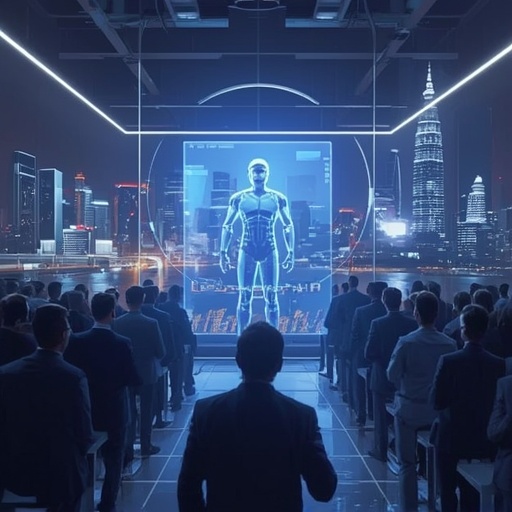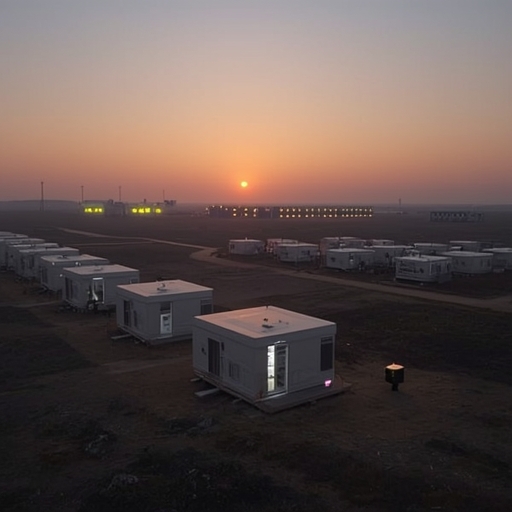
In a striking convergence of industrial heritage and digital innovation, developers of next-generation AI data centers are borrowing a concept from an era that once symbolized a very different kind of frontier—the so‑called ‘man camps’ originally designed to accommodate transient oil field workers in remote, rugged terrains. These modular living quarters, historically associated with resource extraction industries, are now being reimagined as functional housing solutions for highly specialized engineers and technicians operating on the edges of the technological world.
As artificial intelligence infrastructure proliferates, data centers are increasingly being constructed in distant or sparsely populated regions where land, power, and cooling resources are abundant. However, with such expansion comes the challenge of human logistics: where do the teams who build, maintain, and optimize these digital fortresses live? The revival of portable, industrial‑style accommodations provides one pragmatic answer. Developers are reinterpreting the utilitarian efficiency of man camps—prefabricated modules, shared communal spaces, and scalable design principles—to support workforces that must exist in proximity to immense, energy‑intensive AI operations.
Beyond mere practicality, this phenomenon highlights the evolving interface between technology and human existence. The physical reality of digital infrastructure has often been invisible to the end user, yet these new living arrangements expose the human dimension behind supposedly automated systems. In effect, the rise of AI‑era camp housing prompts broader inquiries into sustainability, quality of life, and ethical responsibility. How should companies reconcile the efficiency demands of 24‑hour data processing with the social and environmental implications of isolated worker habitats? What models of community, inclusivity, and welfare can be maintained when the workforce occupies temporary, modular environments built for speed rather than permanence?
In this context, the return of work camps becomes more than a logistical strategy—it acts as a cultural and architectural metaphor for our time. The same industrial pragmatism that once supported energy extraction is now sustaining the extraction of something more intangible: data and intelligence. These outposts of computation, humming quietly at the fringes of civilization, reveal how the future of technological growth remains entwined with very human concerns of shelter, labor, and belonging. The question is no longer just where AI lives, but also how the people enabling it will live alongside it in the decades to come.
Sourse: https://techcrunch.com/2026/03/08/owner-of-ice-detention-facility-sees-big-opportunity-in-ai-man-camps/