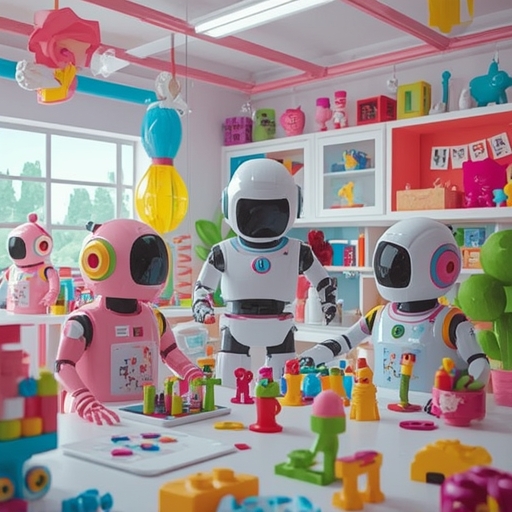
Hasbro, one of the world’s leading toy manufacturers, is embarking on a bold and imaginative transformation that intertwines creativity and advanced technology. Chief Executive Officer Chris Cocks recently unveiled an extraordinary initiative in which an artificial intelligence–driven version of the beloved character Peppa Pig is actively participating in the toy design process. This innovative experiment represents far more than a technological novelty — it marks a striking fusion of nostalgia, storytelling, and algorithmic intelligence to redefine what play can mean for future generations.
Cocks emphasized that incorporating AI into Hasbro’s design workflow allows the company’s creative teams to explore ideas that might have once seemed impossible. The virtual Peppa Pig, recreated as a sophisticated digital collaborator, helps designers conceptualize fresh toy mechanics, visual aesthetics, and narrative themes tailored to young audiences who increasingly engage with interactive content. Far from replacing human creativity, this synthetic partner serves as both muse and analytical assistant, generating imaginative concepts while learning from human designers’ feedback. The collaboration between imagination and computation brings to life a rich dialogue between art and science — one that seeks to produce toys that respond to evolving cultural trends, preferences, and educational values.
By integrating AI into its creative ecosystem, Hasbro is effectively pushing the boundaries of traditional product development. The company envisions intelligent systems not merely as design tools but as co-creators capable of modeling play patterns, simulating user experiences, and optimizing storytelling across multiple brands — from Transformers and Monopoly to My Little Pony. This synergy between algorithmic adaptability and human insight promises to accelerate innovation, reduce creative bottlenecks, and cultivate designs that resonate deeply with children’s curiosity and emotional connection to play.
However, the initiative also raises thought-provoking questions about authorship and the ethics of automated creativity. When a virtual character such as Peppa Pig begins to contribute to toy concepts, where should the line between human artistry and machine influence be drawn? Hasbro’s leadership appears prepared to address these issues with transparency, framing AI as a complement rather than a substitute. The aim is to foster a sustainable creative process in which technology amplifies human imagination without diminishing authenticity.
In an industry increasingly shaped by rapid technological advancement, Hasbro’s strategy exemplifies how established brands can remain innovative while honoring their creative heritage. The collaboration with an AI incarnation of Peppa Pig is not only a marketing milestone but also a testament to how storytelling, play, and machine learning can merge into a single continuum of inspiration. As consumers consider the prospect of toys conceived through such partnerships, Hasbro invites the public to reflect on the possibilities: what happens when a beloved character becomes both the product and the designer? Through this blending of heart, humor, and high technology, Hasbro is not just designing toys — it is sculpting the future of imagination itself.
Sourse: https://www.theverge.com/podcast/890703/hasbro-toys-games-magic-exodus-ai-tariffs