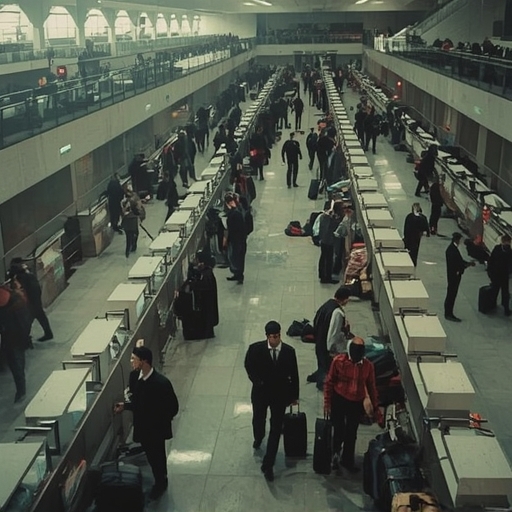
Major airports across the United States have descended into scenes of deep frustration and mounting disorder as the prolonged government shutdown continues to ripple through the nation’s transportation network. At terminals once defined by efficiency and predictability, weary travelers now endure significant delays, serpentine queues, and the pervasive uncertainty that comes when vital systems begin to falter.
While Transportation Security Administration (TSA) officers and Coast Guard personnel persist in performing their duties with commendable dedication, many are doing so under the extreme strain of receiving no pay. Entire teams of public servants are showing up daily, motivated by duty rather than compensation, even as they turn to community food banks and personal savings to sustain themselves. Their quiet perseverance amid crisis underscores the profound human toll that political stalemates can exact on those tasked with keeping essential services running.
In stark contrast, certain federal agencies remain unaffected, continuing operations with full funding and stability. This uneven distribution of financial support has ignited intense debate about the underlying priorities of government budgeting during periods of political impasse. The sight of unpaid workers maintaining national security, while other departments continue business as usual, challenges perceptions of fairness and raises essential questions about institutional resilience and moral responsibility.
Beyond the immediate disruptions to air travel—where missed flights, long security lines, and increased wait times dominate headlines—the crisis reveals deeper vulnerabilities within the infrastructure of American governance. It invites reflection on how a modern society should structure its safeguards to prevent the paralysis of critical public services when political negotiations fail. For travelers, this moment serves as a vivid reminder that the systems ensuring their safety and mobility depend not only on technology and resources but on the steadfast commitment of individuals working quietly behind the scenes.
As the shutdown persists, the national conversation expands: How do we ensure that essential workers are protected from the consequences of political stalemates? What mechanisms can preserve operational continuity when leadership falters? The current airport chaos does more than inconvenience passengers—it highlights the fragility of the public sector when used as leverage in partisan battles, and the extraordinary strength of those who, despite adversity, continue to keep the nation moving forward.
Sourse: https://www.theverge.com/policy/891686/dhs-government-shutdown-ice-cbp-tsa-airports