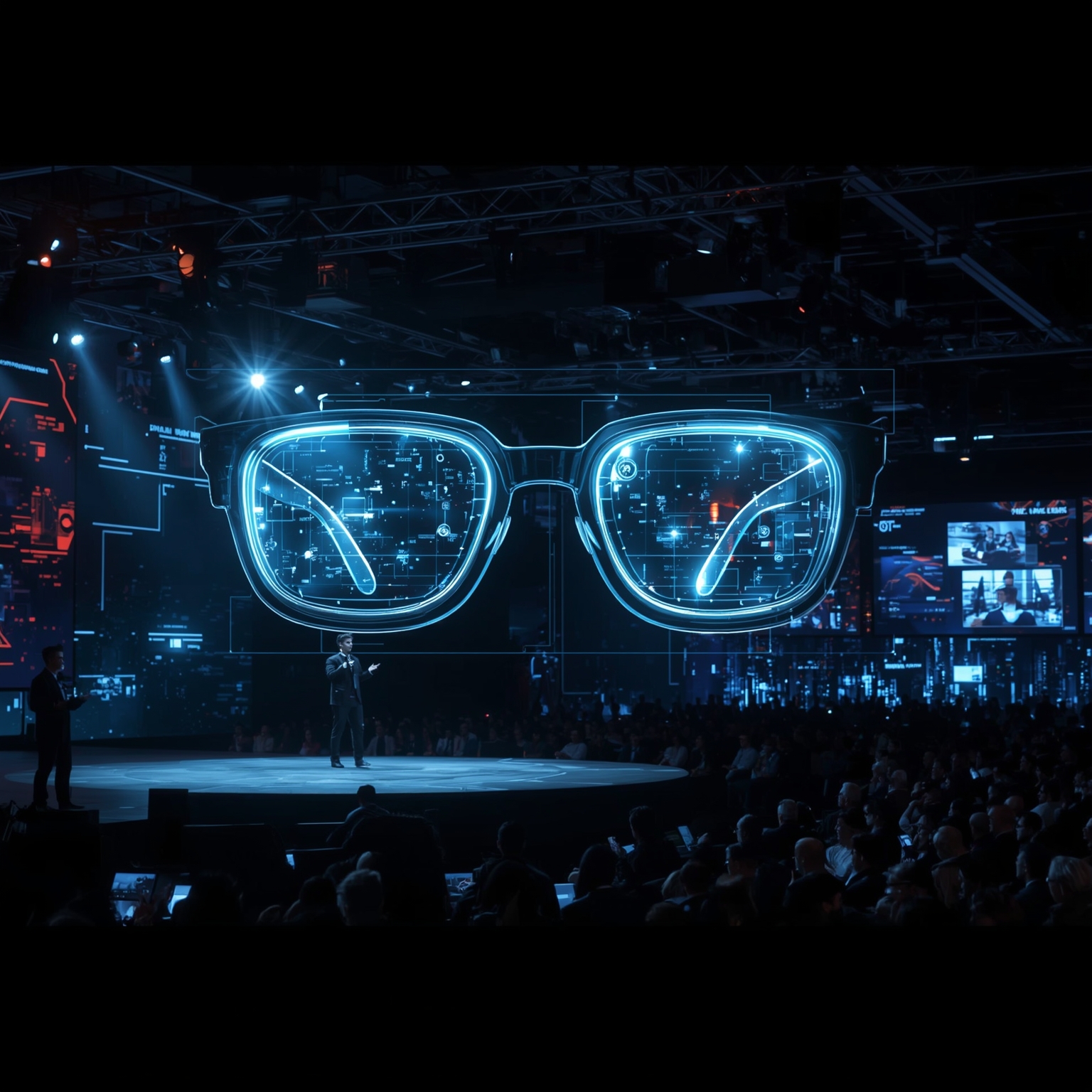
Meta has formally unveiled its latest suite of artificial intelligence–driven wearable devices, a collection designed not only to provide entertainment or convenience but to fundamentally reframe the way individuals experience daily life. These products, according to the company’s founder and CEO Mark Zuckerberg, are poised to become indispensable companions by enabling users to discreetly send messages, overlay real-time subtitles onto their surroundings, and even engage in online browsing with a newfound sense of style and efficiency.
Zuckerberg introduced the wearables during Wednesday’s Meta Connect conference in Menlo Park, positioning them as the natural evolution of personal technology. He described smart glasses specifically as the “ideal form factor” for what he calls personal superintelligence—a concept built around the idea that powerful AI systems should be seamlessly integrated into tools that allow users to remain immersed in the present moment, rather than distracted by screens. Through these glasses, he argued, artificial intelligence can actively improve human communication, sharpen mental recall, expand sensory perception, and ultimately make individuals more capable in their daily lives. This vision further cemented Meta’s ambition to bridge the physical and digital worlds with immersive, AI-enhanced devices.
The announcements also validated a leaked promotional video from earlier in the week, which had already revealed two of the company’s headline innovations: a neural wristband that pairs with Ray-Ban Meta glasses, and a sport-oriented design produced in collaboration with Oakley, dubbed the Vanguard. Investors responded cautiously but positively, with Meta’s shares rising by half a percentage point after Zuckerberg concluded his keynote address.
The company’s presentation centered on five important developments—four flagship product announcements and one high-profile demonstration mishap.
**1. A stepping stone toward Orion glasses**
Meta revealed updates for the Ray-Ban Meta smart glasses, a product line that has already exceeded two million sales worldwide. With a starting price of $299, these glasses are set to receive a major enhancement: a new immersive, in-lens display complemented by a neural wristband that utilizes surface electromyography to detect fine-grained muscle activity. Equipped with integrated cameras and audio components, the display will enable users to view messages, photos, and prompts from Meta AI directly within the lenses, all while offering up to six hours of battery life.
Zuckerberg emphasized the enduring popularity of the Ray-Ban design, calling them “the most iconic glasses in history” and remarking on his own habit of wearing them throughout the day. The upgraded version, created in partnership with eyewear conglomerate EssilorLuxottica, will be released in two frame sizes and multiple color options starting September 30. They will be available through select U.S. retailers including Best Buy, LensCrafters, and official Ray-Ban outlets, with pricing beginning at $799 for the complete set. A broader global rollout is expected by early 2026. Analysts have interpreted this pricing structure as a strategic step upward toward the eventual launch of Orion, Meta’s augmented reality glasses, which Zuckerberg has previously acknowledged would cost approximately $10,000 per unit to produce in their current form.
**2. The neural wristband**
Accompanying the glasses is Meta’s much-anticipated neural wristband, which is designed to register subtle finger and hand movements through muscle signals. This enables users to type, navigate menus, or issue commands without the need for traditional touchscreens. Zuckerberg hailed the device as a major scientific milestone, noting its stylish color variations, water resistance, and 18-hour battery capacity. During a live onstage demonstration, he showcased how the wristband could be used to type and transmit messages on WhatsApp directly to Andrew Bosworth, Meta’s Chief Technology Officer.
**3. The “era of athletic intelligence”**
Meta’s ambitions extend into the realm of sports and physical performance through the unveiling of Vanguard, a new performance-focused model created in collaboration with Oakley. Scheduled for release on October 21 and already available for pre-order, the Vanguard adheres to Oakley’s signature wraparound frame design, featuring a specialized lens that offers strong protection against both dust and sunlight. More notably, it boasts the highest level of water resistance among Meta’s existing eyewear lineup. Zuckerberg revealed he has personally tested the product while surfing, underlining its robust utility. Meta has also detailed that athletes using Vanguard glasses alongside Garmin-branded wearable devices will be able to query the integrated AI for real-time updates on metrics such as heart rate and speed, receiving immediate feedback through voice commands. Additionally, the glasses will make it possible to record hands-free video content in up to 3K resolution.
**4. Advances in virtual reality via Quest headsets**
Another central announcement concerned Meta’s VR hardware line. The company is rolling out a new functionality within its Quest headsets that allows users to scan an entire room within minutes, in turn generating a virtual environment that closely mirrors the physical space. Zuckerberg described the result as “immersive, true-to-life experiences” capable of simulating real-world interactions and credible physics. Although first teased last year, the feature is now accessible to creators and developers, representing another step toward Meta’s overarching project of building the Metaverse—a digital ecosystem envisioned as a parallel environment where individuals can work, socialize, and play.
**5. Demonstration setbacks and technical glitches**
Despite the excitement, the presentation was hampered by a series of technical problems that threatened to overshadow the otherwise ambitious announcements. During a live demonstration of the new Ray-Ban Meta glasses, celebrity chef Jack Mancuso attempted to show how the AI could provide step-by-step instructions for preparing a Korean-inspired steak sauce. However, the system stumbled noticeably, skipping instructions, failing to respond properly to follow-up questions, and repeating itself unnecessarily. Mancuso attributed the lapses to a faulty Wi-Fi connection.
The complications continued when Zuckerberg personally demonstrated the neural wristband. Although he successfully sent a message to Bosworth, his attempt to answer a live video call faltered multiple times, as the wristband did not respond to his commands. In a lighthearted attempt to defuse the situation, Bosworth joined him on stage, wryly noting that the conference’s Wi-Fi connection was to blame. Zuckerberg concluded on a philosophical note, observing that, no matter how many times one rehearses a presentation, the unpredictability of live demonstrations remains a constant challenge.
Taken together, the keynote highlighted both Meta’s bold vision of the future—where AI wearables seamlessly integrate into everyday life—and the very real technological limitations that still stand in the way. Although the glitches may have earned more laughter than applause in the moment, they underscored the difficulty of leading the charge into an uncharted technological frontier.
Sourse: https://www.businessinsider.com/five-biggest-takeaways-mark-zuckerberg-meta-connect-ai-glasses-products-2025-9