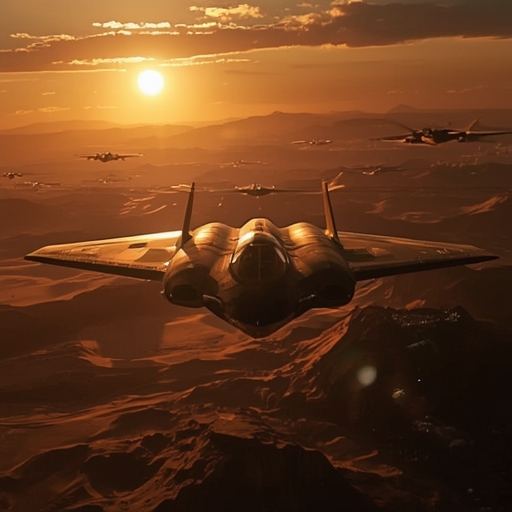
In a statement that could redefine the boundaries of aerial engagement across the Middle East, a senior United States general has officially reported that Iran’s most sophisticated air defense systems are no longer considered a substantial threat. This pivotal development effectively grants U.S. and Israeli forces a significantly broader operational range, allowing them to conduct deep-penetration missions within Iranian airspace and adjacent territories with markedly reduced risk. Such an advancement signals not only a tactical victory in terms of technological superiority but also a wider strategic transformation in the region’s defense equilibrium.\n\nThe diminishing potency of Iran’s high-tier defensive architecture — long viewed as one of the principal deterrents to Western or allied aerial incursions — reflects an evolving contest of innovation, intelligence, and precision targeting. For decades, Iran invested heavily in developing layered radar networks and anti-aircraft missile systems meant to deny adversaries access to its airspace. The recent neutralization of these systems therefore carries profound military implications. It suggests that persistent cyber operations, advanced electronic warfare techniques, and precision munitions have succeeded in blinding or degrading critical defensive nodes, creating vulnerability where once there was near-impenetrability.\n\nFrom a strategic perspective, this shift could dramatically reshape how both allies and adversaries approach regional security. With the United States and Israel now afforded greater operational freedom, the deterrence calculus across the Persian Gulf is fundamentally altered. Commanders can plan missions that previously would have posed unacceptable danger, while policymakers might interpret this technological dominance as a means to apply renewed pressure on Tehran’s military posture and its satellite networks of influence.\n\nYet beyond the realm of tactics and armaments, this revelation underscores a broader narrative about the accelerating pace of defense innovation. Air superiority in the twenty‑first century is no longer determined purely by numbers of aircraft or missile range but by the ability to neutralize complex systems through data fusion, signal interference, and algorithmic precision. Iran’s apparent vulnerability serves as a case study in how swiftly once‑formidable defensive barriers can deteriorate when confronted with adaptive adversaries capable of dynamic, multi‑domain warfare.\n\nUltimately, these developments open a new chapter in both military and geopolitical strategy. As the skies over the Middle East grow increasingly transparent to allied operations, the consequences will ripple across diplomatic channels, deterrence doctrines, and regional balance assessments. What emerges is a new strategic landscape — one shaped less by static fortifications and more by technological agility, intelligence control, and the capacity to command the aerial domain with unhindered confidence.
Sourse: https://www.businessinsider.com/iran-higher-end-air-defenses-no-longer-factors-us-general-2026-3