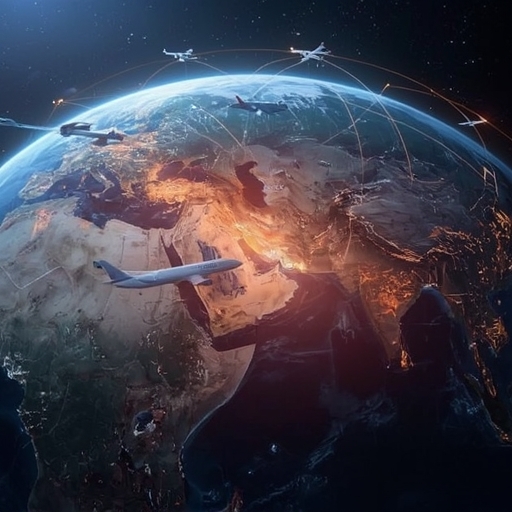
As rising geopolitical tensions continue to unsettle the Middle East, the world’s leading airlines are responding with calculated caution and strategic restraint. Major international carriers have begun to scale back their flight operations across the region, opting to cancel or reroute services well in advance. This deliberate reduction in connectivity reflects not only immediate safety considerations but also a broader acknowledgment of the unpredictable nature of the regional conflict and its ripple effects on global travel.
Industry executives explain that such proactive measures are essential when dealing with volatile geopolitical landscapes. With uncertainty surrounding airspace safety, airport accessibility, and potential policy restrictions, companies are prioritizing passenger security and operational stability above short-term profitability. Airlines are thus adapting their flight schedules weeks ahead of time, an unusual strategy that reveals both foresight and apprehension about the longevity of current hostilities.
The consequences of these adjustments extend far beyond regional borders. As critical air corridors become constrained, carriers must implement complex detours that lengthen flight times, raise fuel costs, and necessitate intricate logistical recalibrations. Travelers, too, face broader implications — from disrupted itineraries to reduced availability of flights linking Asia, Europe, and Africa through Middle Eastern hubs. Such developments underline how closely global mobility is intertwined with international diplomatic stability.
Aviation analysts have long recognized the Middle East as a crucial nexus of global air traffic, serving as both a transport crossroads and an economic conduit between continents. The fact that airlines are now reevaluating their presence there demonstrates the fragility of worldwide connectivity amid geopolitical pressures. This evolving situation, although challenging, also underscores the resilience and adaptability of the aviation sector. In moments of crisis, carriers must balance operational precision, corporate responsibility, and human safety — a triad that defines the very essence of modern air travel.
Ultimately, this wave of cancellations and reduced service highlights a fundamental truth: the aviation industry, despite its technological advancements and global reach, remains deeply dependent on peace and predictability. In times of unrest, every decision — from adjusting a single flight path to suspending entire routes — becomes a reflection of how international business must continually navigate a world in flux. These recent developments, then, are not merely logistical updates but part of a broader narrative about risk management, international cooperation, and the ongoing quest to sustain global mobility even amid uncertainty.
Sourse: https://www.businessinsider.com/airlines-canceling-middle-east-flight-routes-british-airways-iran-war-2026-3