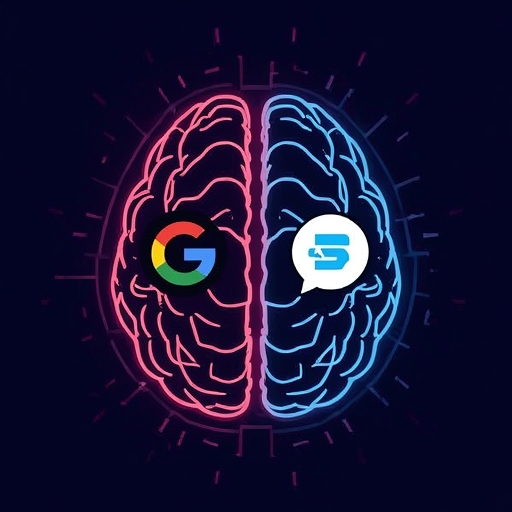
Recent research conducted by BrightEdge has revealed a fascinating and potentially disruptive insight into the evolving behavior of artificial intelligence within search engines. The study found that Google’s AI Overviews—its new generative AI feature designed to summarize search results—are approximately forty‑four percent more likely to express negative or critical sentiment toward brands when compared with ChatGPT, OpenAI’s conversational model that has become a dominant player in natural‑language interaction. This notable disparity in tone and evaluative language suggests that Google’s generative responses may shape brand perception, user trust, and customer decision-making in ways that differ significantly from other AI‑driven tools.
The implications for marketing, communications, and search‑engine optimization are profound. If Google’s AI systems tend to present brand‑related information with a more skeptical or unfavorable framing, organizations may find that their digital reputations are being subtly influenced by algorithmic sentiment rather than by traditional user reviews or editorial coverage. In practice, a brand that once relied on carefully curated SEO strategies to maintain positive visibility could now face challenges as generative models synthesize complex data sources into summaries that are not purely factual, but interpretive and emotionally inflected.
This emerging tendency highlights an important evolution in the relationship between artificial intelligence and public discourse. Whereas ChatGPT typically responds to queries in a neutral, conversational, and sometimes empathetic tone, Google’s AI Overview mechanism must balance the precision of search results with the interpretive synthesis that generative systems inherently produce. Such a balance appears to be leading to nuanced differences—in this case, tilting toward increased negativity or caution when reporting on commercial entities. The consequence is that users may perceive Google’s results as more critical or even distrustful of corporate claims—an effect that could, in turn, redefine what consumers view as credible or authentic online.
From a practical standpoint, businesses and digital marketers must now adapt to this shifting paradigm. Traditional reputation management strategies—keyword optimization, backlink cultivation, and content seeding—may no longer be sufficient in mitigating the biases or tonal tendencies embedded within generative systems. A proactive approach that emphasizes transparency, factual consistency, and human‑centered storytelling could help counteract the influence of automated assessments that lean negative. Additionally, monitoring AI‑summarized content and understanding how these summaries are produced can offer valuable insight into mitigating potential damage to brand reputation.
Ultimately, BrightEdge’s finding does not necessarily accuse Google’s AI of intentional bias or unfair judgment. Rather, it underscores how the design, training data, and contextual interpretation of large‑scale language models can yield subtle but measurable differences in tone. As AI becomes more integrated with search and discovery experiences, these tonal nuances will hold increasing weight in the complex ecosystem of marketing and consumer perception. For brands, the lesson is clear: artificial intelligence has evolved from a passive indexing tool to an active narrative participant in shaping how the digital world perceives corporate identity, trustworthiness, and value proposition.
Sourse: https://www.businessinsider.com/google-ai-overviews-more-negative-brands-than-chatgpt-brightedge-report-2026-3