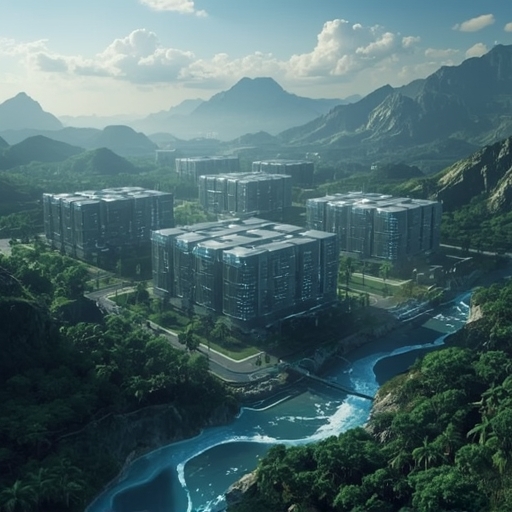
Across the United States, artificial intelligence continues to captivate the public imagination with promises of greater efficiency, creativity, and technological advancement. Yet beneath this enthusiasm lies a deeply complex reality — one centered on the physical infrastructure required to sustain this digital transformation. Vast data centers, often hidden behind unassuming facades or nestled far from major cities, form the beating heart of the AI revolution. These facilities house countless servers that process, store, and distribute the massive amounts of information modern algorithms require. However, their operation demands immense quantities of both energy and water, turning what might appear to be a purely digital ecosystem into a resource-intensive industrial network.
Communities are becoming increasingly aware of these environmental implications. What was once seen as abstract technological progress is now physically manifesting in neighborhoods and local landscapes. In many regions, residents express growing concern over how these data centers consume electricity drawn from local grids or rely heavily on water for cooling systems. Such apprehensions reflect a broader societal reckoning with the intersection of innovation and sustainability — a realization that digital expansion cannot remain detached from ecological responsibility. For instance, towns that once welcomed tech development for its economic promise now find themselves grappling with water shortages, noise disturbances, or visual impacts on once-pristine rural areas.
The debate is therefore shifting from whether technological growth is beneficial to how it should be achieved. The challenge ahead lies in balancing the relentless drive toward computational progress with equally urgent environmental preservation. Can AI and sustainability truly coexist, or must one compromise for the other? Policymakers, energy specialists, and technology companies are being pressed to rethink infrastructure in ways that reduce emissions, incorporate renewable energy, and prioritize local ecosystems. Forward-thinking solutions — such as repurposing waste heat, using green power sources, or innovating more efficient cooling techniques — demonstrate that responsible innovation is not only possible but increasingly necessary.
Ultimately, this issue encapsulates a defining question of our era: how to harness groundbreaking technological potential without sacrificing the very resources that sustain life on Earth. The conversation is no longer only about digital ingenuity but about the moral and ecological choices behind it. Americans’ passion for AI remains strong, yet their call for accountability grows louder with each new server added to the network. The outcome of this dialogue will determine whether the future of technology can be not only intelligent but also ethical, resilient, and sustainable.
Sourse: https://www.businessinsider.com/data-center-construction-ai-environment-backlash-pew-research-2026-3