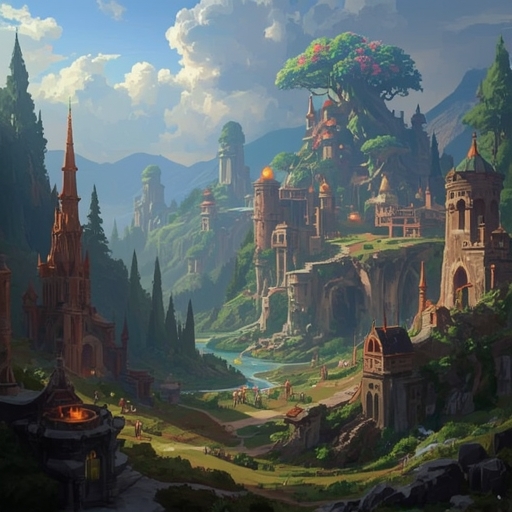
In the ever-expanding universe of fantasy literature, Brandon Sanderson stands as one of the foremost voices redefining what imaginative storytelling can achieve. Rather than relying on the familiar archetypes of elves, dwarves, or orcs—those immortalized by J.R.R. Tolkien and subsequently woven into decades of derivative works—Sanderson consciously elects to chart his own creative path. His philosophy centers on the belief that fantasy should be a boundless space in which writers are free to construct entire mythologies from the ground up, unrestricted by inherited conventions.
For Sanderson, this commitment to originality is not a rejection of tradition so much as an evolution of it. Tolkien established the bedrock of modern fantasy, demonstrating how myth, linguistics, and moral resonance could combine to produce an enduring fictional world. Yet Sanderson argues that clinging to those same elements without transformation risks stagnation. To him, worldbuilding thrives when it dares to ask, “What if magic worked differently? What if creatures evolved under alternate laws of nature? What if human cultures developed around wholly distinct cosmologies?” By continually posing such questions, he ensures each new series he creates feels both recognizable and refreshingly alien at once.
His approach illustrates a broader truth about the genre’s trajectory. Contemporary fantasy has matured to the point where imitation is no longer the highest form of admiration—it is innovation that honors its predecessors. Sanderson’s works exemplify how authors can acknowledge Tolkien’s influence while refusing to remain confined by his framework. Through intricate systems of magic, carefully realized civilizations, and moral complexities that mirror our own world, he demonstrates that imagination, when disciplined by craft, can yield infinite permutations of wonder.
In essence, Sanderson’s avoidance of elves and dwarves is symbolic of his devotion to discovery. It is an artistic choice grounded in respect for the past yet propelled by the conviction that fantasy, like language or culture, must evolve. His vision invites both readers and fellow writers to look beyond the well-trodden paths of Middle-earth and to step boldly into unexplored realms of thought and creativity. In doing so, he affirms that the genre’s greatest power lies not in repetition, but in its perpetual capacity to reinvent itself and to remind us that within the human imagination, there truly are no limits.
Sourse: https://gizmodo.com/brandon-sanderson-explains-why-he-doesnt-write-about-elves-or-dwarves-2000733551