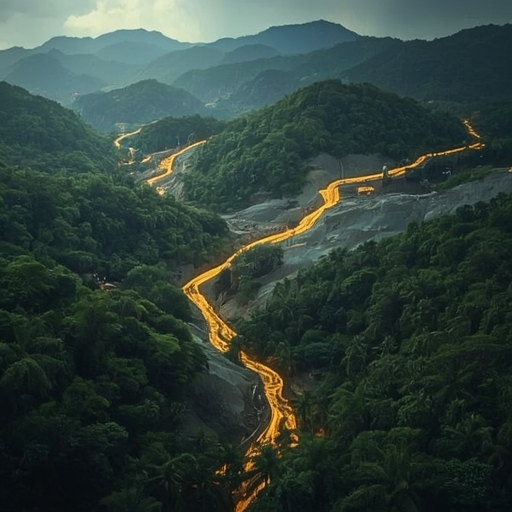
As the global price of gold climbs to unprecedented heights, Colombia has found itself at the epicenter of a rapidly expanding and increasingly unregulated gold rush. This surge in commodity value has not only intensified extraction within legitimate mining sectors but has simultaneously given rise to a parallel economy driven by illegal operations. Across the dense jungles and remote river valleys, thousands of informal miners are now working beyond the reach of the law, extracting gold under perilous conditions that devastate the environment and embolden organized criminal networks.
The dynamics powering this phenomenon are deeply intertwined with global demand—particularly from the United States, whose markets remain among the largest consumers of Colombian gold. While on the surface the trade appears lucrative and distant from the violence behind it, every shipment of untraceable metal carries the fingerprints of illicit exploitation, corruption, and ecological collapse. The toxic use of mercury, clear-cutting of forests, and poisoning of waterways have all become defining scars of this underground industry, which thrives in regions where regulatory oversight is weak and employment alternatives are scarce.
For organized crime, illegal mining has become the new oil—offering immense profits with relatively low risk. Former guerrilla and paramilitary factions, once dependent on the narcotics trade, have now turned their attention to controlling gold production and smuggling routes. Their operations stretch from rural mining fronts all the way to international export channels, laundering dirty gold into the global financial system with startling efficiency. In many towns, the influx of quick money has fueled corruption and violence, while local communities bear the burden of displacement and environmental ruin.
Meanwhile, in the United States and other Western economies, the insatiable appetite for gold—whether for jewelry, investment, or industrial use—creates a demand that sustains this shadow economy. Despite growing awareness and public campaigns advocating for ethical sourcing, the reality remains that much of the gold entering legal markets cannot be reliably traced to its origin. The result is a troubling moral equation: luxury in one hemisphere financed by suffering in another.
The challenge of halting this new criminal gold rush lies not only in enforcing laws within Colombia but also in reshaping global supply chains and consumer behaviors. Stricter certification systems, transparent auditing mechanisms, and corporate accountability are critical if the cycle of exploitation is to be broken. Without such reforms, the glitter of gold will continue to mask a darker truth—that each shimmering ounce may carry the weight of deforestation, human toil, and organized crime. In an age where sustainability and ethical consumption are more important than ever, the urgent question remains: how much farther will the world allow greed to outweigh responsibility?
Sourse: https://www.businessinsider.com/us-number-one-destination-for-illegal-colombian-gold-2026-3