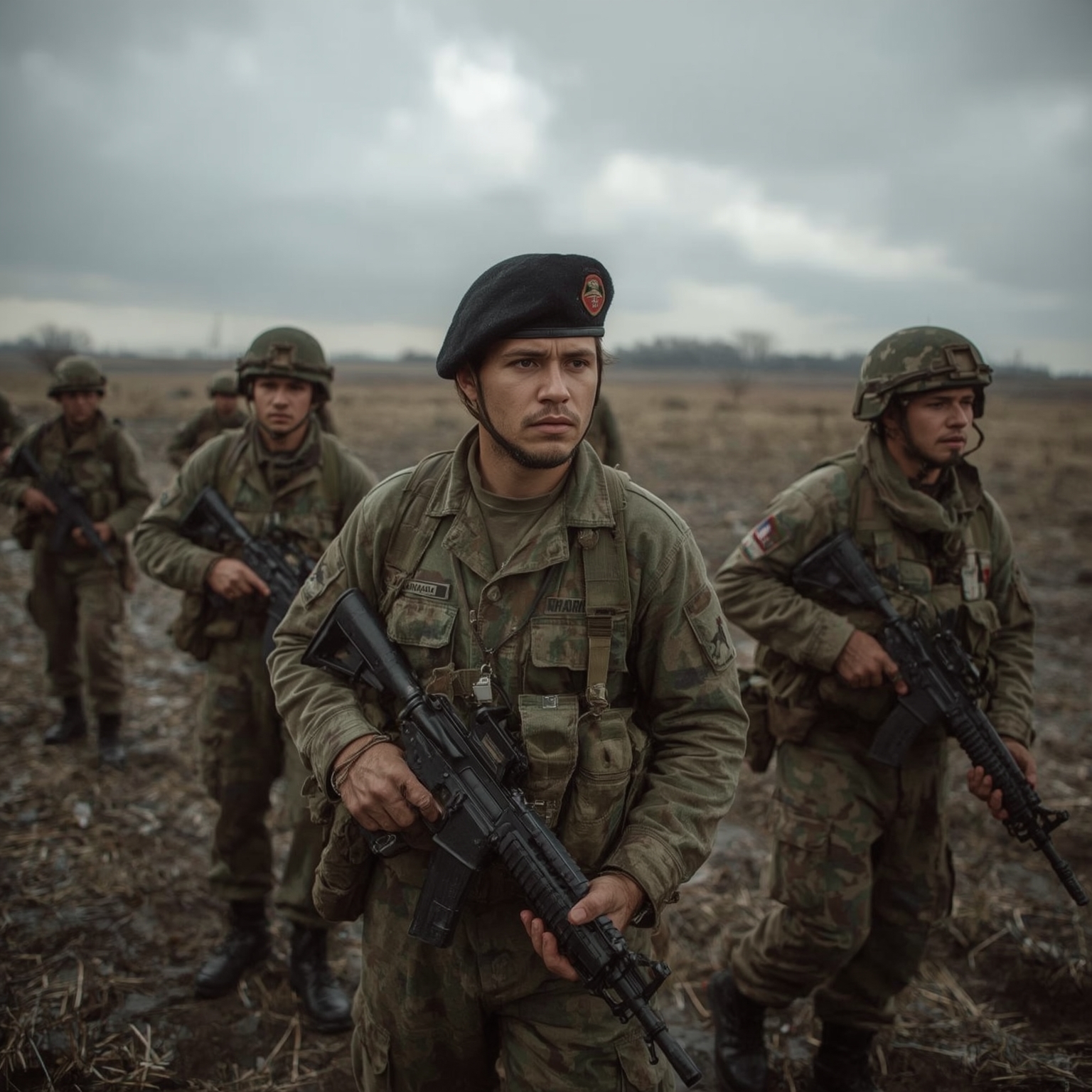
During a congressional security briefing held on Wednesday, Ukrainian intelligence officials disclosed striking details regarding Russia’s current military manpower strategy. According to their assessment, Moscow has recruited no fewer than 20,000 Cuban nationals, drawing them into the conflict not as conventional soldiers but rather as mercenaries who are contractually bound to fight on Russia’s behalf. The revelation was shared by Andriy Yusov, a senior spokesperson for Ukraine’s Main Intelligence Directorate, commonly known by its acronym HUR. Speaking before members of the United States House of Representatives, Yusov emphasized that, among all nations supplying Russia with foreign recruits, Cuba now ranks at the very top of the list in terms of volume and consistency.
Elaborating on the intelligence, Yusov revealed that Ukrainian monitoring indicates a specific figure of more than 20,000 individuals from Cuba who have already completed the necessary paperwork and been formally integrated into Russia’s mercenary network. His remarks, carefully translated for legislators, underline how both Russia and Ukraine are grappling with increasingly severe personnel shortages as the war grinds well into its fourth year. For Russia in particular, escalating battlefield losses have pushed military planners to seek manpower abroad, turning noticeably toward recruits not only from Cuba but also from regions such as North Korea, various Middle Eastern states, and numerous countries throughout Africa. These foreign fighters are then dispatched to participate in large-scale ground operations, actions that may succeed tactically but frequently come at extraordinarily high human cost.
Yusov provided further granularity to his claims, noting that Ukrainian intelligence has positively identified a minimum of 1,038 Cuban fighters who entered service under formal contracts between June 2023 and February 2024. While he refrained from specifying precisely how this intelligence was gathered, he hinted—together with other Ukrainian officials—that a significant segment of this contingent has already either been killed in action or captured during combat engagements. Reflecting on demographic details, Yusov explained that the average Cuban mercenary engaged in hostilities is approximately 35 years of age. On paper, these individuals are paid roughly $2,000 per month in compensation for their services. He lamented that at an age when many people would otherwise be raising families and advancing in their professional lives, these men are instead drawn into the destructive cycle of warfare for monetary gain.
Beyond those formally contracted, Ukrainian intelligence records reveal that at least 250 Cuban fighters remain active at the front lines even after the expiration of their original agreements, suggesting either coercion, necessity, or continued willingness to fight despite contractual limitations. Regarding their prospects for survival, Yusov candidly admitted that HUR’s datasets are incomplete. Nevertheless, available evidence indicates a grim trend: foreign mercenaries deployed by Russia often perish within a relatively short period, typically around 140 to 150 days after beginning their service. Explaining the motivation behind Russia’s approach, Yusov argued that the Kremlin perceives distinct advantages in employing Cuban nationals and other foreigners. If such soldiers are killed, the Russian state effectively avoids the financial and political liabilities associated with compensating families, since the relatives of these fighters reside outside Russia and cannot exert internal pressure against the war effort.
This strategy stands in notable contrast with policies directed at Russian nationals serving in the military. Since 2022, President Vladimir Putin has enacted a series of laws enshrining state obligations to provide monetary payouts to soldiers directly injured in combat, as well as to the families of those who have died. While Moscow has avoided publishing official statistics on the fiscal burden such programs impose, independent analysts widely contend that the accumulated costs are placing measurable pressure on Russia’s economy. In this light, foreign mercenaries become a cost-effective, expendable resource for the Kremlin.
The congressional briefing also featured contributions from Ukrainian lawmaker Maryan Zablotskyy, who bolstered Yusov’s assertions by sharing original documentation allegedly linked to Cuban personnel. Among the documents presented was a comprehensive list containing names, ages, contract start dates, and death dates of Cuban fighters who have perished in the conflict. Additional papers reportedly included a plea from a Cuban woman addressed to a Russian ombudsman as she searched for information regarding her missing husband, records of contracts offered to female Cuban citizens, as well as judicial documentation tied to a local Russian recruiter. In this testimony, one recruiter openly admitted to having overseen the recruitment of between 6,000 and 7,000 Cuban individuals, thereby shedding light on the considerable scope of the effort. Zablotskyy observed that if a single recruiter could facilitate thousands of enlistments, the magnitude of Cuba’s mercenary contribution to Russia’s war machine may be much larger than initial figures suggest.
The meeting had wider political undertones beyond the sharing of intelligence. Organized by Republican representatives from southern Florida—a region home to a substantial Cuban American population—the session sought to galvanize international condemnation of Havana. Both U.S. officials and their Ukrainian counterparts reiterated accusations that the Cuban government bears at least implicit responsibility for facilitating, or at minimum tolerating, the flow of its citizens into Russia’s ranks. Although Cuba’s foreign ministry publicly maintained in 2023 that it had taken action against alleged trafficking networks involved in funneling Cuban nationals into military service, independent experts with years of research on Cuban affairs expressed skepticism. They argued that such large-scale operations would have been nearly impossible to carry out without at least tacit awareness or complicity on the part of Cuban authorities.
Despite the gravity of these revelations, neither the Cuban Ministry of Foreign Affairs nor its Russian counterpart offered comments on the matter when contacted outside their usual office hours. The lack of response leaves many questions unanswered while simultaneously allowing speculation about the true depth of collaboration—or at least tolerance—between Havana and Moscow to persist.
Sourse: https://www.businessinsider.com/russia-hired-thousands-cuban-mercenaries-fight-ukraine-hur-intelligence-2025-9