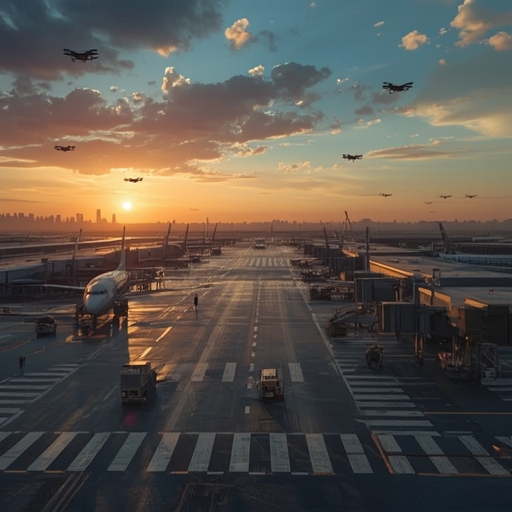
In an alarming and highly disruptive incident, a drone strike occurred near Dubai International Airport, one of the busiest aviation hubs in the world, resulting in widespread operational turmoil. The immediate consequences of this unexpected event included numerous flight diversions, extensive delays, and a temporary suspension of all departures and arrivals within the facility. These preventative measures were rapidly implemented by both Emirates Airline and airport authorities in an effort to ensure the safety of passengers, airline personnel, and aviation infrastructure, which remains the foremost priority in such emergency situations.
The strike has created immense ripple effects across global air traffic networks. Passengers en route to Dubai found their journeys redirected toward nearby regional airports and alternative international destinations, illustrating how a single disruption at a critical nexus can have far-reaching implications throughout the global aviation industry. Inside the terminals, travelers faced uncertainty as information boards displayed a string of cancellations and revised schedules, while ground staff and air traffic controllers coordinated tirelessly to minimize the chaos.
Officials at the General Civil Aviation Authority swiftly mobilized crisis response protocols, coordinating with national defense and transportation agencies to assess the extent of the disruption and evaluate potential risks to airspace security. Emergency teams deployed drones and surveillance systems of their own to monitor the vicinity for additional hazards, ensuring that no further incursions threatened aviation safety.
This unsettling event underscores not only the vulnerability of large-scale transportation hubs to technological interference but also the urgent necessity of enhanced counter-drone systems and stronger international regulations governing unmanned aerial vehicles. In recent years, incidents involving unauthorized drone activity near airports have escalated worldwide, prompting regulators and airport administrators to invest heavily in detection and mitigation technologies designed to swiftly neutralize such threats before they endanger aircraft in flight or on approach.
In the aftermath, Dubai’s aviation and security authorities continue to work in close collaboration to restore normal operations and reassure passengers of the system’s resilience. Travelers have been advised to remain attentive to real-time airline notifications and official statements, as rescheduling efforts unfold. As this situation develops, it serves as a powerful reminder of the complexity and interdependence of modern aviation systems—and the critical importance of preparedness, vigilance, and rapid response in maintaining global transport stability and public confidence.
Sourse: https://www.businessinsider.com/drone-strike-dubai-airport-unleashed-fresh-travel-chaos-flights-diverted-2026-3