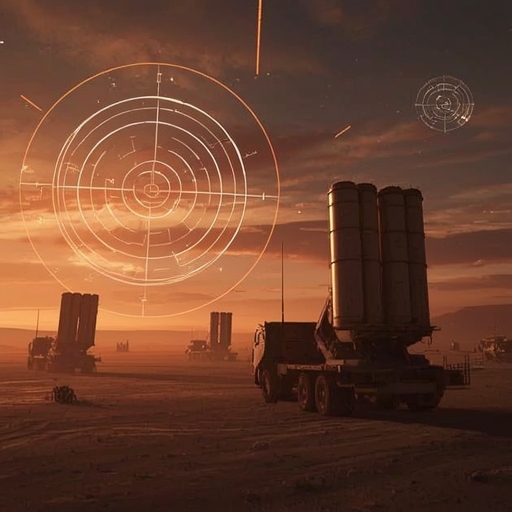
Across the volatile skies of Iran, a complex and technologically sophisticated confrontation is placing extraordinary pressure on the United States’ missile reserves—resources that were once regarded as robust indicators of long-term military readiness. The present conflict has introduced a new, sobering reality: America’s vast stockpiles are being depleted at a pace far exceeding the capacity of its defense industry to replenish them. For the Pentagon, this evolving situation has become more than a logistical inconvenience; it represents a pivotal test of industrial agility, strategic foresight, and global supply resilience.
For decades, the United States built its security posture on the assumption that large-scale inventories of precision weaponry and missile systems would function as a deterrent against major adversaries. However, the current conflict in Iran has exposed the limits of that assumption. The modern battlefield—with its reliance on precision-guided munitions, rapid deployment, and sustained aerial operations—demands not only ample supplies but also the ability to manufacture replacements at unprecedented speed. The Department of Defense now faces a daunting paradox: producing missiles and interceptors faster than they are expended, all while navigating a global supply chain already strained by previous commitments, including extensive military support for Ukraine.
Military analysts and defense economists alike warn that the intersection of high consumption rates and restricted production capacity could produce a lasting vulnerability in America’s strategic posture. Industry experts are urging immediate investments in production infrastructure, specialized materials, and advanced automation to prevent critical shortages. The issue extends well beyond raw output; it encompasses the entire network of subcontractors, logistics hubs, and technological dependencies that feed into missile manufacturing. Any disruption—whether caused by geopolitical tension, material scarcity, or inefficiencies in procurement—can have cascading effects that reverberate across the entire defense ecosystem.
At its core, this situation represents a profound test of the United States’ ability to sustain modern warfare in an era defined by high-intensity, technology-driven engagements. The question is no longer solely about how many missiles the nation possesses in storage, but also about how swiftly these complex systems can be replaced once launched. In a world where adversaries adapt rapidly and conflicts can escalate with little warning, replenishment speed has become as crucial a metric of military readiness as the weapons themselves.
Ultimately, the war in Iran is not only a kinetic conflict but also a contest of industrial endurance and logistical sophistication. As America confronts the twin pressures of dwindling stockpiles and overstretched supply lines, its defense sector stands at a critical crossroads. Whether the country can adapt—accelerating production while preserving quality, maintaining secrecy while expanding capacity—will determine not just the outcome of a single war, but the future credibility of the nation’s global defense strategy. #Defense #MissileSupply #Geopolitics #WarfareAnalysis
Sourse: https://www.bloomberg.com/news/videos/2026-03-16/the-us-is-eating-through-its-missile-stockpile-video