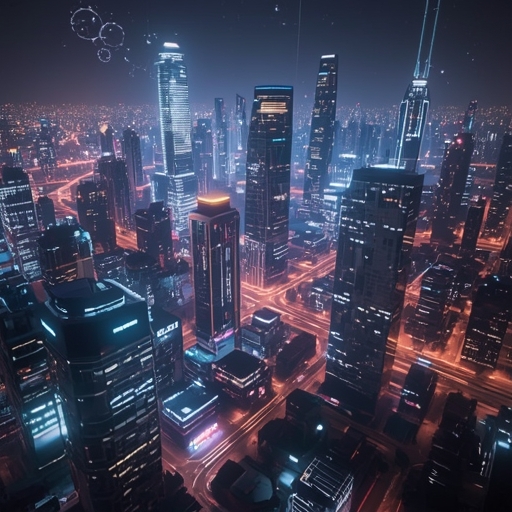
NVIDIA has officially introduced DLSS 5, a monumental advancement that could fundamentally reshape the way interactive digital worlds are designed and experienced. This release represents not just another generational upgrade to the company’s Deep Learning Super Sampling technology, but a striking fusion of real-time rendering techniques with the creative power of generative artificial intelligence. By integrating machine learning models capable of synthesizing visual details, lighting variations, and motion patterns on the fly, DLSS 5 moves beyond simple upscaling—it transcends the traditional boundaries of computer graphics altogether.
At its core, the technology brings the precision and adaptability of AI to processes that previously relied exclusively on hand-coded algorithms and manual artistry. NVIDIA’s CEO, Jensen Huang, dramatically characterized this new level of capability as “the GPT moment for graphics,” drawing a clear parallel between large language models revolutionizing communication and DLSS 5’s potential to redefine digital imagery. The comparison underscores how deeply generative AI is beginning to influence all forms of creative computation. Artists, developers, and gamers alike are witnessing a shift in which artificial intelligence no longer merely assists the creative process but actively participates in it.
This advancement has inevitably sparked both excitement and introspection across the technological and artistic communities. Enthusiasts praise DLSS 5 for its capacity to make hyper-realistic visuals accessible in real time without the traditional computational overhead. In their view, this capability could open new creative frontiers for developers who have long been constrained by rendering costs and performance limitations. Yet, critics voice apprehension that the growing influence of generative algorithms might dilute the human touch in digital artistry, potentially altering aesthetic authenticity by substituting handcrafted detail with AI-synthesized textures.
Regardless of where one stands on the debate, there is little doubt that DLSS 5 signals a decisive turning point in the evolution of visual computing. It marks a moment when artificial intelligence is no longer an auxiliary feature but a central architectural principle underpinning next-generation graphics. From photorealistic environments that adapt dynamically to player behavior, to seamless transitions between stylistic modes and lighting conditions, the boundaries between design, algorithm, and imagination continue to blur. As conversations about technology and creativity advance, one certainty emerges: with DLSS 5, NVIDIA has not merely launched an upgrade—it has set in motion a profound transformation in how visual experiences will be conceived, crafted, and lived in the years ahead.
Sourse: https://www.theverge.com/news/895472/nvidia-dlss5-generative-ai-pc-graphics