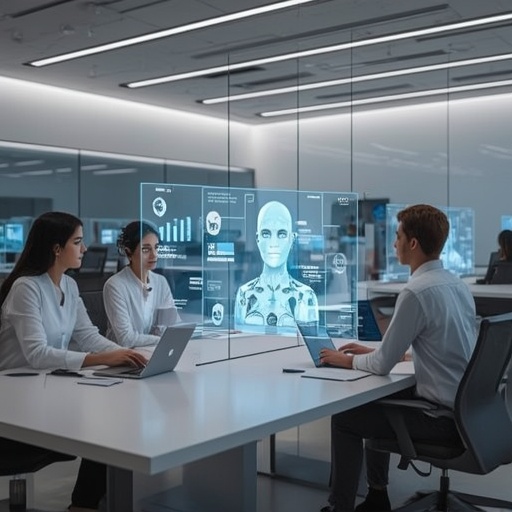
The future of coding stands at a breathtaking intersection of innovation and uncertainty, where the boundaries between human creativity and machine intelligence are blurring at an unprecedented pace. Artificial intelligence has begun to assume a commanding role in software development, transforming the once purely manual craft of programming into a sophisticated process of orchestration and collaboration between human ingenuity and algorithmic precision. Developers, who were once defined by their ability to write elegant lines of code, are now stepping into the new identity of architects and conductors, guiding intelligent agents, code copilots, and automated frameworks that can generate, debug, and optimize software in ways previously unimaginable.
This transition signals not merely an enhancement of efficiency but a paradigm shift in the very philosophy of creation. Coding is evolving from an act of constructing syntax to an art of curating logic — from typing instructions to designing intelligent behaviors. Consider an engineer who supervises a suite of autonomous systems, each capable of writing or refactoring entire modules. The human role becomes one of vision, ethics, and decision-making, defining what should be built rather than executing how it is done. The keyboard remains, but it is no longer the primary instrument of creation; instead, insight, critical reasoning, and creative foresight take center stage.
With these profound innovations come equally profound questions: if machines can produce functional code, what becomes of the human coder? For many, this shift evokes both enthusiasm and apprehension. On one hand, the integration of AI promises unprecedented productivity, reducing the burden of repetitive technical chores. On the other, it challenges our notions of expertise, rendering some traditional skills less relevant while demanding new literacies in data interpretation, model supervision, and ethical oversight. Developers now face the exciting responsibility — and occasional anxiety — of mastering not only programming languages but also the language through which they command intelligent agents.
The convergence of automation and creativity is rewriting the narrative of what it means to develop software. Teams will need to redefine collaboration, designing workflows where human intuition complements algorithmic suggestion. Organizations that adapt to this transformation early will thrive as pioneers of a hybridized craft, where human imagination shapes machine output, and where every line of code — whether written by a person or generated by an AI — serves as a manifestation of shared intelligence. The future of coding, therefore, is not about replacing developers but redefining them: from typists of code to strategists of innovation, from problem solvers to visionaries guiding digital intelligence into the next era of creation.
Sourse: https://www.theverge.com/podcast/895910/claude-code-future-developers-vergecast