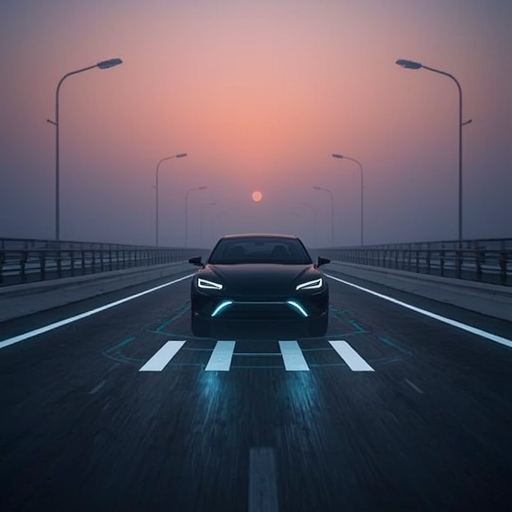
Tesla’s Full Self‑Driving (FSD) technology has once again become the subject of intense public and regulatory attention, as the National Highway Traffic Safety Administration (NHTSA) announces an expanded inquiry into how effectively the system performs under challenging weather and environmental conditions. The agency’s renewed focus centers particularly on situations involving limited visibility — such as when dense fog, torrential rain, or low‑light scenarios obscure a driver’s view — all of which can severely complicate the decision‑making algorithms that underpin autonomous mobility.
This new phase of investigation builds on previous examinations of the FSD suite, reflecting increasing governmental concern over the interaction between complex machine‑learning systems and unpredictable real‑world hazards. While Tesla has positioned FSD as a pioneering step toward full autonomy, regulators appear determined to test whether its performance consistently ensures occupant and pedestrian safety in less‑than‑ideal conditions. The outcome of this probe could carry considerable implications: should investigators find systemic deficiencies, a recall or mandatory software update might be required, potentially reshaping how emerging autonomous technologies are validated worldwide.
For Tesla, the stakes are substantial. The company has long marketed its vehicles as exemplars of cutting‑edge innovation, emphasizing continuous over‑the‑air improvements that evolve the driving experience over time. Yet, as the NHTSA expands its scrutiny, questions arise regarding where the line should be drawn between rapid technological advancement and the regulatory imperative to safeguard the public. Supporters argue that such evaluations are necessary to build broad trust in automation, while critics warn against excessive oversight that might slow progress in a field destined to transform modern transportation.
Ultimately, this investigation is more than a review of one company’s product; it encapsulates a broader debate about accountability, transparency, and the pace of innovation in artificial‑intelligence‑driven mobility. Whether the outcome leads to refinement, recall, or renewed confidence, the findings will likely influence how future self‑driving systems are tested, certified, and introduced to the roads. As the conversation between safety regulators, engineers, and consumers continues to intensify, one central question remains—how can humanity embrace the promise of autonomous technology without compromising the paramount principle of human safety?
Sourse: https://www.theverge.com/transportation/897303/tesla-full-self-driving-nhtsa-probe-march-2026