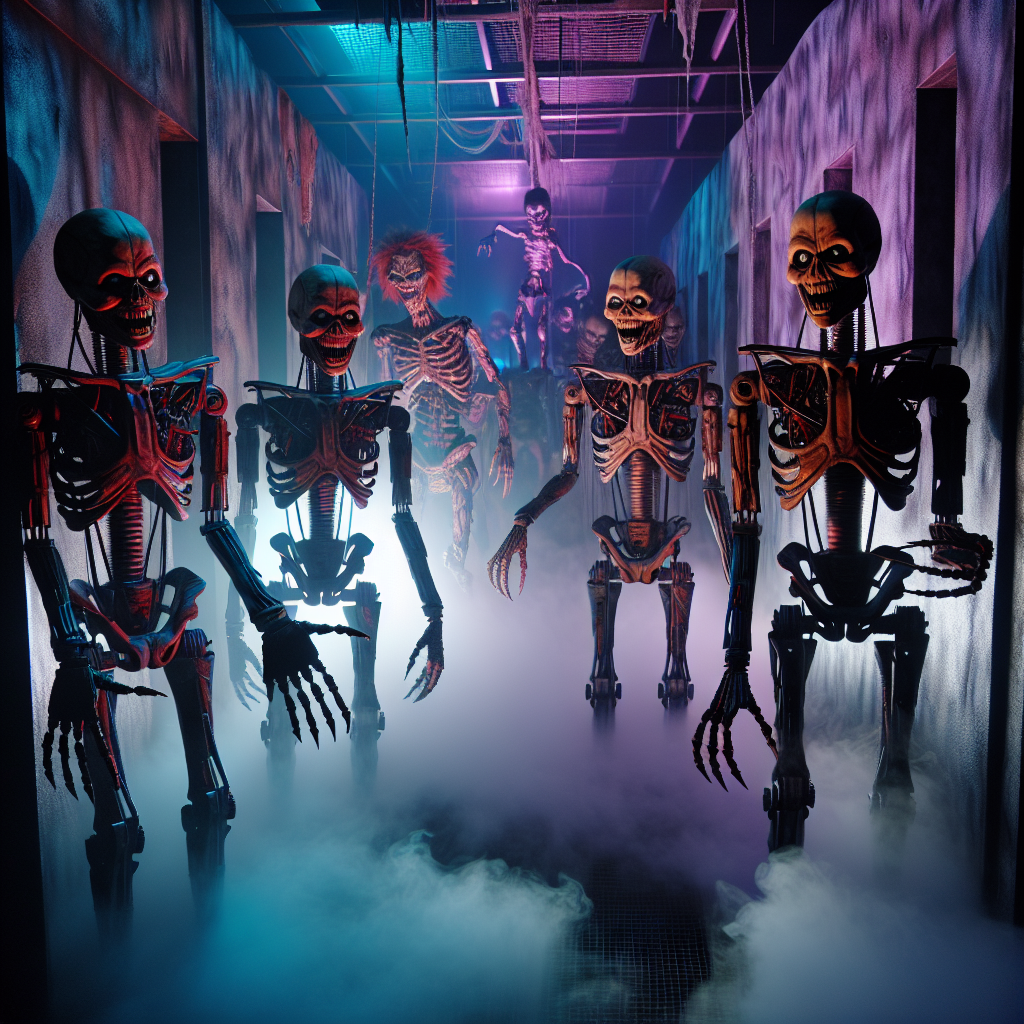
Step into the chilling world of Universal Studios’ Halloween Horror Nights, where visitors are invited to experience a fully realized *Five Nights at Freddy’s* haunted attraction that feels as though the infamous Freddy Fazbear’s Pizza has been transported directly from the imagination of game creator Scott Cawthon and filmmaker Emma Tammi’s cinematic adaptation. The attraction is intended not merely as a walkthrough experience but as a faithful reconstruction of one of gaming’s most terrifying environments, brought to life with cutting-edge artistry and technical innovation.
Journalists from io9 were granted the rare opportunity to explore the attraction behind the scenes in Hollywood before its official debut. Creative director John Murdy guided the tour, carefully pointing out the collaborative effort that made this possible—a partnership involving the Halloween Horror Nights design team, Scott Cawthon himself, and the highly celebrated craftspeople of Jim Henson’s Creature Shop. The latter studio, world-renowned for its mastery in puppetry and creature design, furnished the event with extraordinary character builds, making the animatronic beings from *FNAF* appear startlingly real. Universal’s in‑house engineers then took the designs a step further with advanced electronics, ensuring that the figures moved with uncanny precision and frightening vitality.
Murdy explained that the attraction builds on the event’s long tradition of mechanical innovation. A few years back, a group of young mechanical engineers from Universal’s technical services department—enthusiasts of Halloween Horror Nights themselves—approached the design team with the idea of creating genuine animatronic figures for the haunted houses. What began with experimental *Chucky* animatronics has since expanded into increasingly ambitious projects. From mechanically animated hordes of Chuckys to sophisticated creatures for *A Quiet Place*, the team has steadily grown its technical mastery. This year, they are handling even more complex projects, including a fully electronic version of Freddy Fazbear himself and a massive T‑60 figure inspired by *Fallout*. These advances mark a decisive evolution for the event: blending practical effects and state-of-the-art robotics to elevate immersive storytelling.
When it came to *Five Nights at Freddy’s*, Murdy acknowledged that this house stood apart from previous projects. The franchise, long requested by fans, presented unique design challenges that required a fresh approach. Traditionally, haunted houses rely primarily on scareactors—performers in costume delivering sudden frights. However, the physical demands of replicating the *FNAF* animatronics posed safety concerns, ruling out the possibility of simply putting actors in bulky suits. Instead, the team reached out to Jim Henson’s Creature Shop, which had already proven its expertise by building puppets for the Blumhouse *FNAF* film. Unlike a film set where performers can rest between takes, Halloween Horror Nights requires actors to remain in action for extended rotations, so ergonomics and comfort became paramount. Weekly meetings with Creature Shop designers over the course of an entire year ensured that both the visual authenticity and performer safety were preserved while still delivering the level of realism fans expected.
Equally important was the set design itself. Guests will be plunged directly into the world of Freddy Fazbear’s Pizza, surrounded by painstaking recreations of the restaurant’s cluttered charm and sinister atmosphere. Murdy confirmed that both the Hollywood and Orlando iterations of the house are nearly identical, with only minor distinctions, and both include carefully placed Easter eggs referencing elements from the film and lore. Children’s crayon drawings hinting at the legendary Yellow Rabbit, as well as in‑universe security training videos, provide subtle nods for fans paying close attention. From the very first steps into the restaurant’s parlor area—complete with a stage where animatronics spring eerily to life—the sense of immersion is overwhelming. Here, puppetry merges with scareactors, allowing for a blend of mechanical horror and traditional jump scares, with ghostly children and destructive intruders rounding out the unsettling environment. Iconic figures like Foxy are introduced through sound design, their presence signaled by sinister music as though the visitor themselves were taking on the role of Josh Hutcherson’s Mike Schmidt during a haunted security nightshift.
Murdy went into detail about the innovative mechanisms behind Freddy Fazbear’s movements within the attraction. Drawing on concepts tested during the *Chucky* house, which featured both giant and miniature versions of the doll, the team developed what they call a “traveler track” apparatus. This system allows performers strapped into the figure to actually walk in limited steps while the towering Freddy looms above guests, closing the distance in an unnervingly lifelike way. Such design choices ensure that encounters with characters like Freddy, Chica and Cupcake, Bonnie, Foxy, and the ominous Yellow Bonnie feel as threatening as they appear in the game.
Though the attraction is designed to thrill diehard *FNAF* loyalists, it also accommodates newcomers unfamiliar with the lore. For sharp‑eyed fans, the design team planted subtle details on the security desk—such as striped cups and even a foil ball—that directly reference the games’ communities of speculation. Sensory immersion is taken even further with the introduction of nostalgic scents engineered to evoke the atmosphere of 1990s family entertainment centers. Murdy described the aroma strategy as a kind of olfactory storytelling: buttery popcorn scents fill the showrooms while the pizza smell dominates the kitchen, subtly invoking the uneasy contrast between childlike amusement and nocturnal terror.
The entire journey is accompanied by music carefully curated from the franchise, with the most recognizable theme greeting guests right at the façade of the attraction. Beyond that introduction, the score transitions into cinematic compositions from the film, supporting the eerie atmosphere with both familiarity and dramatic tension. For long‑time Halloween Horror Nights attendees, this house represents a new benchmark in blending film, video game adaptation, and live entertainment into a single terrifying experience. The intricate puppetry by Henson’s team, the mechanical ingenuity of Universal’s young engineers, and the dedication to fan service through Easter eggs and environmental storytelling collectively create an unforgettable event.
The *Five Nights at Freddy’s* haunted house officially opens on September 4, beckoning daring guests into Freddy Fazbear’s world during this year’s Halloween Horror Nights at Universal Studios. Horror, gaming, and theme park enthusiasts alike will find that the boundaries between cinematic nightmare and real‑world spectacle have never been thinner.
Sourse: https://gizmodo.com/meet-freddy-fazbear-five-nights-at-freddys-halloween-horror-nights-2000649820