Mark Cuban, the billionaire entrepreneur and technology visionary, has presented a thought-provoking perspective on the trajectory of humanoid robotics. According to him, the global race to create fully functional humanoid robots — machines that not only resemble humans in appearance but also attempt to replicate our physical movements and complex cognitive interactions — is likely to encounter a critical impasse within the next five to ten years. His viewpoint challenges the prevailing optimism surrounding this pursuit and invites a deeper reflection on what genuine innovation in robotics should entail.
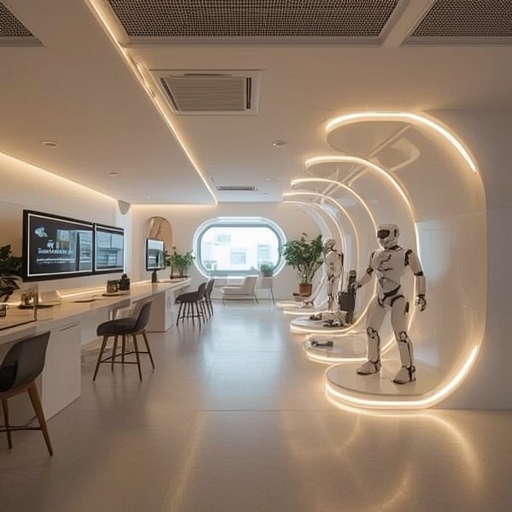
Cuban contends that the primary flaw in current humanoid robot design lies in its attempt to imitate humans too literally, prioritizing resemblance over efficiency. Instead of forcing machines to conform to the constraints of the human form, he envisions a more symbiotic direction — a future in which robots and physical spaces are conceived and developed together from the very beginning. This concept of “co-designed environments” reframes the relationship between technology and architecture: rather than retrofitting robots into human-centric spaces like homes, warehouses, or factories, we should reshape those environments to complement robotic capabilities, maximizing both productivity and harmony.
In practical terms, this means that innovation will not emerge from simply making robots walk, talk, and gesture like people. It will flourish when engineers, architects, and designers collaborate to build ecosystems specifically tailored for robotic interaction — smart buildings equipped with adaptive systems, modular interiors that integrate seamlessly with robotic logistics, and workplaces infused with sensors that anticipate both human and mechanical needs. Such integration transforms robots from mere tools into partners embedded in the physical and digital fabric of our daily lives.
Cuban’s argument also suggests a philosophical shift in how we define progress in artificial intelligence and automation. The goal is no longer to replicate humanity, but to extend it — to create intelligent systems that enhance human potential by operating where we cannot, or by performing tasks with precision and endurance beyond our natural limits. By co-designing spaces and machines, we move closer to a future of fluid cooperation, where the boundaries between architecture, robotics, and cognition blur into a single, efficient continuum.
Thus, while the humanoid robot race may be reaching its structural and conceptual limits, Cuban sees immense opportunity in redirecting its energy toward adaptive innovation. The next wave of robotics, he predicts, will not walk on two legs like us — it will instead elevate how we work, move, and live within environments designed to collaborate with intelligence itself. This forward-thinking approach redefines what it means to build the future: not by replicating humanity, but by evolving in tandem with technology.
Sourse: https://www.businessinsider.com/mark-cuban-humanoid-robotics-will-fail-robots-houses-codesigned-2026-3