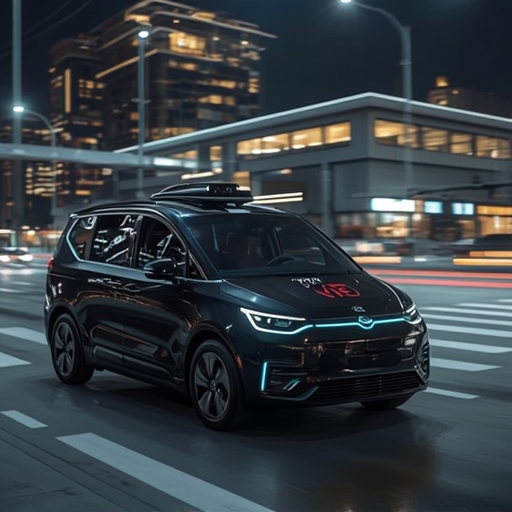
Hyundai’s Motional, the cutting-edge autonomous driving division of the well-known automotive brand, has embarked on a decisive transformation that signals a renewed and methodical pursuit of commercial self-driving technology. After temporarily pausing its anticipated 2024 robotaxi launch to conduct an intensive evaluation of both its engineering foundation and operational framework, the company reemerges with a strengthened partnership with Uber. This strategic collaboration is designed not only to advance the shared goal of achieving scalable, cost-efficient robotaxi deployments, but also to capture sustainable value within the broader mobility ecosystem.
In this revitalized phase, Motional’s approach underscores an important convergence of innovation and economic rationality. Rather than pursuing rapid expansion at any cost, the organization is recalibrating its technological architecture to enhance performance reliability, safety redundancies, and software precision—each of which is fundamental to achieving consumer trust and regulatory confidence in the autonomous sector. Through this process, Motional aims to redefine how urban ride-sharing can operate, blending the precision of artificial intelligence with the pragmatic considerations of large-scale, real-world deployment.
At the core of this transformation lies Motional’s reengineered technology stack—its interconnected system of sensors, algorithms, and real-time analytics—that serves as the vehicle’s digital nervous system. Enhancements in lidar mapping accuracy, multi-modal perception, and decision-making fidelity promise smoother navigation in unpredictable traffic environments, while improvements in hardware modularity allow for quicker updates and lower maintenance costs. These refinements, developed during the strategic pause, directly align with Hyundai’s overarching vision of affordable autonomy by integrating mass-production efficiency with next-generation software intelligence.
The renewed partnership with Uber deepens this technological evolution into a commercial dimension. By leveraging Uber’s platform, which already serves millions of users globally, Motional gains access to an expansive, data-rich ecosystem that can expedite large-scale testing and deployment. This collaboration exemplifies strategic complementarity—Uber’s established service infrastructure and consumer interface join seamlessly with Motional’s sophisticated automation technology. Together, these capabilities aim to deliver a service experience that is not merely futuristic, but also economically viable and operationally sound.
Hyundai’s leadership has framed this renewed effort as both a technological maturation and a strategic repositioning. It represents a shift from experimental innovation toward disciplined execution—a recognition that the future of robotaxis depends not solely on breakthrough software or hardware, but also on the capacity to integrate autonomous systems into the everyday urban fabric. As cities prepare for connected transport ecosystems, Motional’s commitment to reliability, accessibility, and affordability resonates with the growing demand for intelligent mobility solutions that align with environmental and social sustainability goals.
Ultimately, Motional’s reboot is more than just a technical update—it is a deliberate recalibration of the roadmap toward autonomy. The company’s alliance with Uber symbolizes a practical yet ambitious effort to merge cutting-edge science with commercial pragmatism, bringing the promise of autonomous mobility closer to widespread reality. As the autonomous transportation industry matures, Motional’s approach positions it not only as a pioneer in driverless innovation but also as a model for how strategic patience, engineering excellence, and cross-industry collaboration can converge to shape the modern mobility landscape.
Sourse: https://www.businessinsider.com/hyundai-motional-robotaxi-uber-partnership-ceo-laura-major-interview-2026-3