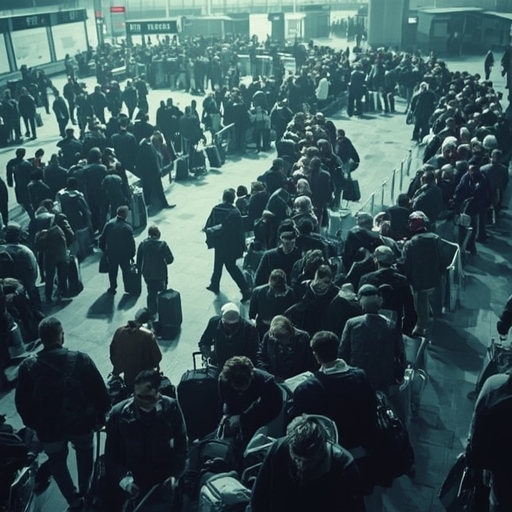
Across airports throughout the United States, an atmosphere of disorder and exhaustion has taken hold as the direct consequences of the ongoing government shutdown ripple through air travel. Terminals once known for their efficiency are now filled with endless lines of anxious passengers snaking through security checkpoints. With the Transportation Security Administration severely understaffed, the system that normally operates with precision is straining under the pressure, causing unprecedented wait times and rising frustration among travelers.
These delays represent more than just an inconvenience; they are a tangible demonstration of how profoundly essential personnel are to the nation’s daily operation. TSA agents, many working without full pay or on extended shifts, embody the unseen backbone of the aviation network. Their reduced numbers, caused by the shutdown’s financial and administrative constraints, have transformed a routine screening process into a test of endurance for both staff and travelers alike. At the same time, airport administrators and airline personnel are attempting to maintain calm and order amid growing uncertainty.
For business travelers, families on vacation, and international visitors, each passing hour in line emphasizes the fragility of the infrastructure that supports American mobility. Simple acts—removing shoes, screening luggage, or presenting identification—now occur at a much slower pace as limited staff attempt to manage immense crowds under stressful conditions. The sense of unease stretches from baggage claims to departure gates, reflecting an ecosystem struggling to adapt.
Experts note that this disruption underscores a larger truth about crisis management and leadership: the smooth operation of air travel depends not only on technology or logistics, but on the steadfast commitment of the workforce behind it. The events at airports nationwide serve as a vivid illustration of how interconnected public service and daily life truly are. As the shutdown continues, travelers are advised to prepare for extended delays, exercise patience, and, above all, recognize that the individuals managing security checkpoints are persevering through exceptional adversity to keep the country moving.
In essence, these scenes—crowded queues winding past checkpoints, announcements echoing over restless crowds, and weary TSA officers working tirelessly—symbolize both the vulnerability and resilience of a system stretched to its limits. Whether observed from the perspective of a policymaker, an airline executive, or an everyday passenger, the national travel disruption has become a profound reminder that stability in complex operations arises from human dedication as much as from policy decisions.
Sourse: https://www.businessinsider.com/look-at-these-chaotic-tsa-lines-across-the-us-2026-3