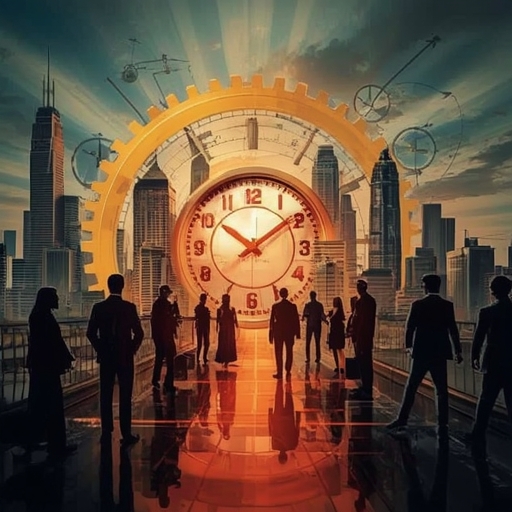
The debate between working harder and working smarter has resurfaced with renewed intensity following a striking claim by a prominent Russian billionaire, who argues that extending daily work shifts to twelve hours and reinstating six-day workweeks could breathe new life into the nation’s economy. His perspective evokes a classic question that has long divided economists, leaders, and employees alike: can economic prosperity truly be manufactured through sheer endurance and relentless labor, or does sustainable progress stem primarily from creativity, innovation, and well-balanced human capital?
From a purely economic standpoint, longer hours might initially seem to promise higher productivity by simply increasing the total amount of labor put forth. In theory, more hours translate into greater output, particularly in sectors heavily dependent on manual or process-driven work. Historically, such models of extended work regimes have periodically surfaced during times of crisis or industrial reconstruction, where governments and businesses emphasized discipline, stamina, and national unity to rebuild economic strength. Yet beneath that surface-level logic lies a complex web of human, social, and psychological considerations that complicate the notion of perpetual overwork as a viable long-term strategy.
Workers subjected to twelve-hour schedules tend over time to experience a pronounced decline in overall efficiency and mental acuity. Numerous studies across different industries highlight a nonlinear relationship between hours worked and total productivity: once fatigue sets in, errors multiply, decision-making deteriorates, and creativity all but disappears. In today’s knowledge-driven global economy, where innovation and adaptability fuel competitiveness, this human dimension cannot be dismissed. Extended workweeks may temporarily amplify gross output but can simultaneously erode the very ingenuity required to sustain lasting growth.
Moreover, this discussion compels reflection on the cultural philosophies underpinning modern economies. In societies where personal fulfillment, leisure, and balance are increasingly seen as indicators of social development, returning to an industrial-age rhythm feels regressive to many. Advocates of efficiency-based innovation point to countries that have demonstrated that shorter, more focused workdays often yield exceptional productivity and employee satisfaction. These examples suggest that economic revival might depend less on sheer exertion and more on structuring work intelligently—leveraging technology, optimizing workflows, and nurturing a highly motivated workforce.
Still, the billionaire’s assertion resonates with those who see value in discipline and collective effort, particularly during uncertain economic times. It rekindles the centuries-old ideal of hard work as both moral duty and patriotic contribution. For supporters of this ethos, long hours symbolize sacrifice and resilience—qualities that historically propelled nations through adversity. Yet reconciliation between that traditional work ethic and the modern pursuit of well-being remains a delicate balancing act.
Ultimately, this proposal raises broader philosophical and practical questions that transcend national boundaries. Is the measure of a nation’s vitality found in how many hours its citizens labor, or in how effectively they convert time and talent into innovation, stability, and shared prosperity? The answer likely lies somewhere between these extremes: economic renewal requires ambition and perseverance, but true progress demands that human effort be harnessed wisely rather than exhaustively. In this ongoing conversation about the future of work, society must decide whether lengthening the day truly advances collective success—or merely exhausts the very resource it depends on most: its people.
Sourse: https://www.businessinsider.com/russia-economy-billionaire-deripaska-12-hour-6-days-work-week-2026-3