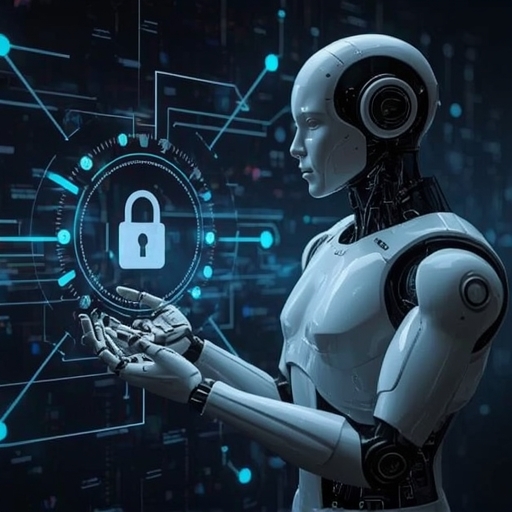
The CEO of Okta has made a compelling and forward‑thinking statement emphasizing the necessity of integrating a universal “kill switch” mechanism within all artificial intelligence systems and autonomous agents. This proposed safeguard is not merely a technical feature but a moral and strategic imperative—an essential barrier ensuring that human control remains paramount, even as machines advance toward increasing independence and self‑direction.
In recent years, as AI has evolved from simple algorithmic tools into self‑learning entities capable of making complex decisions, the potential risks associated with unregulated autonomy have expanded exponentially. The Okta leader’s call for a kill switch underscores an awareness of these emerging ethical and operational vulnerabilities. He insists that even the most sophisticated autonomous agents must contain a human‑governed override—a decisive off mechanism that allows immediate suspension of activities whenever an AI behaves unpredictably, oversteps its intended role, or poses a security, privacy, or ethical threat.
To clarify, this concept does not imply a lack of trust in technological innovation. Rather, it recognizes that innovation without restraint can be as dangerous as stagnation. A robust control mechanism preserves the delicate equilibrium between progress and protection. For instance, in cybersecurity contexts where digital agents can detect and respond to threats faster than any human could, a kill switch ensures that these same agents do not inadvertently create collateral damage by misidentifying harmless network activities as malicious. Similarly, in autonomous vehicles, healthcare algorithms, or robotic process automation, such an emergency termination function ensures accountability, allowing human supervisors to reclaim control instantly if an unexpected chain of decisions threatens safety or privacy.
Beyond its technical implications, the Okta CEO’s message also carries philosophical weight. It serves as a reminder that the march toward artificial autonomy must always be accompanied by ethical foresight and responsible governance. The discourse about AI’s role in society cannot focus solely on capability and efficiency; it must also anticipate vulnerability and moral responsibility. The notion of a kill switch thus symbolizes not technological limitation, but human stewardship—it reaffirms our authority to define boundaries, enforce ethical standards, and protect the trust placed in intelligent systems.
Ultimately, this concept resonates with a broader truth: the future of artificial intelligence depends on how well humans regulate and guide it. As we continue to create systems that think, learn, and act, we must preserve mechanisms that remind them—and ourselves—who remains in command. Responsible oversight, encoded both in software architecture and organizational philosophy, will determine whether AI becomes a sustainable ally or an unpredictable adversary. In this sense, the Okta CEO’s advocacy for a universal kill switch echoes far beyond cybersecurity—it speaks to the very foundation of trust, control, and accountability in the age of intelligent machines.
Sourse: https://www.businessinsider.com/oktas-ceo-ai-agents-kill-switch-2026-3