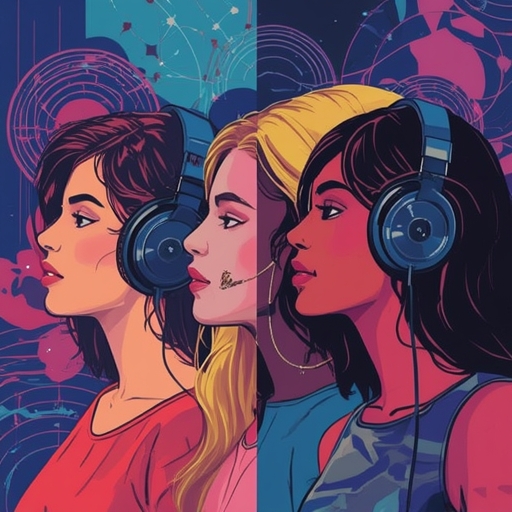
In the evolving landscape of digital discourse, a striking and unexpected phenomenon is quietly but steadily unfolding: women are entering a realm traditionally regarded as the preserve of men. This realm—often described as the ‘manosphere’—has long been associated with male-oriented podcasts, online discussions, and social commentary that reflect masculine perspectives on culture, relationships, and modern identity. Yet recently, an increasing number of women have begun to listen, engage, and critically respond to these discussions, signaling not only a widening of audience demographics but also a profound reconfiguration of how gendered spaces in media are formed and understood.
This development suggests that the rigid categorical divisions that once defined digital communities are beginning to dissolve. Media consumption, once perceived through a lens of gender exclusivity, is now showing signs of remarkable flexibility. Female listeners are demonstrating that intellectual curiosity and a willingness to explore differing viewpoints transcend the boundary lines traditionally drawn between masculinity and femininity. Their participation does not merely represent passive listening; rather, it illustrates an active engagement with conversations that help them better grasp how narratives of power, identity, and culture circulate across the internet.
The influx of female audiences into these predominantly male domains reveals a deeper cultural shift. In an age where podcasts and digital dialogue shape public opinion as significantly as traditional journalism once did, this diversification underscores the complexity of contemporary media consumption. Women entering this space are not necessarily aligning themselves with the ideologies they encounter—often quite the opposite. Many are critically analyzing these discussions, taking them as opportunities to understand the social dynamics that underpin male-oriented digital communities, and through this, they foster more nuanced interpretations of modern gender discourse.
At the same time, this trend compels content creators to reflect on their assumptions about who their audiences truly are. As women reshape listener demographics, they simultaneously challenge conventional ideas about what constitutes a ‘male’ conversation. They bring fresh perspectives, questions, and interpretive frameworks that expand how these dialogues function within society. The resulting interactions complicate the simplistic binaries that have long structured online communication, suggesting a movement toward more integrative and multifaceted forms of cultural exchange.
Ultimately, the presence of women within this previously gender-exclusive space demonstrates how porous the walls of media segmentation have become. What once might have been regarded as a closed community defined by shared gender identity is now transforming into a more dynamic forum—one where curiosity, intellect, and the desire for understanding supersede outdated assumptions of belonging. Through this gradual transformation, our digital age continues to prove that audiences are no longer passive recipients but active participants, constantly redrawing the lines of conversation and reconstructing the cultural narratives that define modern communication.
Sourse: https://www.wsj.com/business/media/manosphere-women-audience-0acb911a?mod=pls_whats_news_us_business_f


