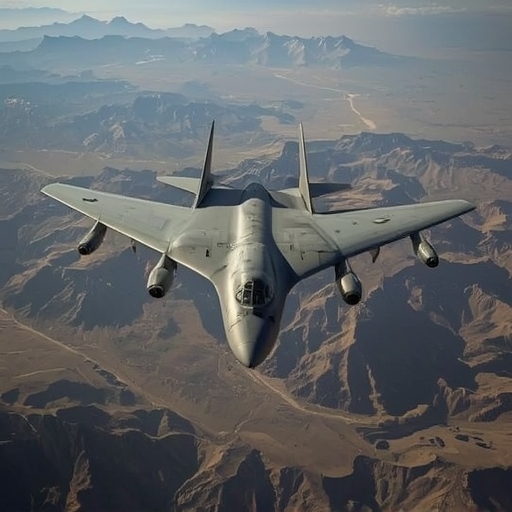
In a moment of considerable international significance, the United States Air Force has ordered the deployment of its formidable B-52 Stratofortress bombers to conduct aerial operations over Iranian territory. This decisive measure represents far more than a routine military maneuver; it signals the onset of a new and strategically complex phase in the evolving geopolitical tensions between the two nations. As these long-range bombers take flight, their presence in the skies illustrates both the technological sophistication and the enduring deterrence value of American strategic airpower.
The B-52, a legendary symbol of U.S. aerial might since the mid-20th century, has long been associated with endurance, payload capacity, and strategic precision. Its reemergence in active deployment underscores the significance of air dominance in shaping the dynamics of modern conflict. Each mission flown by this aircraft is not merely an act of force projection but also a carefully calibrated political signal—one that communicates deterrence, readiness, and geopolitical resolve to adversaries and allies alike.
In the broader context of international defense strategy, this move represents a paradigm shift from reactive mobilization to proactive deterrence. The operational use of the B-52 within the tense atmospheric conditions surrounding Iran indicates an emphasis on preemptive control of the aerial domain, ensuring that strategic endurance and high-altitude coverage are maintained at all times. The aircraft’s range, capable of spanning oceans and continents, allows the U.S. military to exert influence across vast regions without the necessity of immediate ground presence.
Furthermore, the deployment reinforces the enduring principle that technological superiority remains central to military advantage. The B-52, despite being a design dating back over six decades, continues to serve as a linchpin in long-range strike capability through continuous modernization. Its ability to integrate with modern targeting systems, advanced electronic warfare suites, and precision munitions exemplifies the evolving nature of warfare—where legacy platforms merge seamlessly with cutting-edge innovation.
From a geopolitical perspective, this event holds multilayered implications. It may alter diplomatic negotiations, prompting renewed caution among regional actors while simultaneously reaffirming U.S. commitments to strategic deterrence and ally reassurance. The symbolism of the B-52—an aircraft known for its global range and unmistakable silhouette—serves to remind observers that control of the aerial dimension still defines the backbone of power projection in the twenty-first century.
Ultimately, the activation of B-52 operations over Iran marks a critical juncture in both strategic planning and international security posture. It demonstrates that in times of rising uncertainty, airpower continues to offer nations not only military effectiveness but also a potent tool of psychological and diplomatic influence. As engines roar high above the Middle Eastern landscape, the message resounds clearly across the world: the era of strategic air dominance is not fading—it is adapting, expanding, and asserting itself once again in the theater of global affairs.
Sourse: https://www.businessinsider.com/b-52-bombers-enter-war-with-iran-2026-4


