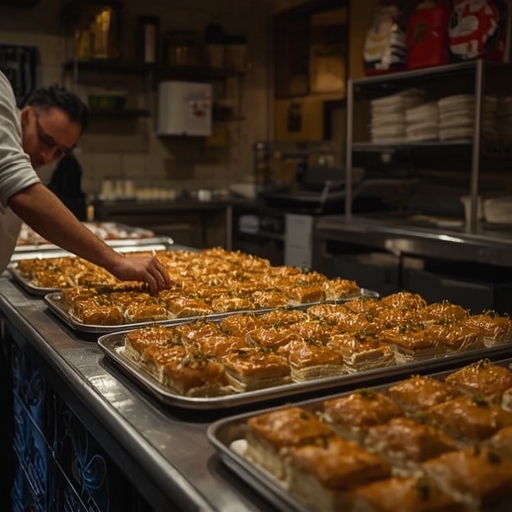
Nestled in the vibrant heart of Gaziantep — often celebrated as Turkey’s undisputed culinary capital — stands a bakery whose ovens have burned continuously for well over a century. Within its aromatic embrace, the 139-year-old legacy of Imam Cagdas endures, representing not merely the act of pastry-making but a living chronicle of artistry, patience, and family heritage passed reverently from one generation to another. To step inside this time-honored kitchen is to enter a space where history is palpably alive: the rhythmic rolling of dough, the soft rustle of delicate filo sheets, and the golden gleam of warm honey are not mere culinary techniques, but rituals refined through more than a hundred and thirty years of devotion.
Since its founding in 1887, Imam Cagdas has maintained an unwavering commitment to crafting baklava entirely by hand — a feat remarkable in an age when mechanization has touched nearly every aspect of the food industry. The artisans here still rely on instinct, not automation, gauging the thinness of the dough with their fingertips and watching the gleam of melted butter to know when it has reached perfection. This meticulous process, repeated countless times across generations, lies at the very core of what makes Gaziantep’s baklava renowned throughout the world. Each golden square emerges as a symbol of unshakable continuity, embodying a culinary philosophy that values precision, patience, and respect for raw tradition.
What makes this enduring craft particularly profound is its intimate connection to place and people. The pistachios used in each tray are gathered from local groves, their distinctive flavor enriched by the region’s unique soil and sunlight. The honey and syrup that bathe the crisp layers are prepared according to recipes that have seen few alterations since Ottoman times. In every shimmering bite lies not merely sweetness, but the essence of Gaziantep — a flavor born of dedication to authenticity, communal memory, and regional pride. For locals, visiting Imam Cagdas is more than a gustatory pleasure; it is a pilgrimage to experience continuity in an ever-changing world.
Over thirteen decades, the kitchen has witnessed the ebb and flow of generations, yet its principles remain immovable. Wooden rolling pins bear the patina of years of use, copper trays glisten under soft light, and the scent of clarified butter instantly evokes nostalgia. For both artisans and patrons alike, each sheet of filo dough represents not only culinary precision but also a tangible link to ancestors who viewed food as a language of love and artistry. The baklava of Imam Cagdas, therefore, is more than dessert — it is edible heritage, painstakingly layered with history, care, and an unbroken sense of purpose.
In a global era where convenience often overshadows craftsmanship, this Turkish institution stands as a profound reminder of why handmade traditions matter. Every steaming tray pulled from the oven tells a story of mastery earned slowly, of skills honed through persistence rather than speed, of family bonds forged across generations. It demonstrates that heritage, when treated with respect, does not merely survive the passage of time — it deepens, becoming richer and more resonant with every carefully folded layer. As visitors bite into the impossibly crisp, honey-soaked perfection of Imam Cagdas baklava, they do not simply taste dessert; they savor history, culture, and the undying spirit of Turkish artisanship that has illuminated Gaziantep’s kitchens for 139 remarkable years.
Sourse: https://www.businessinsider.com/handmade-baklava-turkey-oldest-restaurant-kebab-2026-3


