Pros and Cons
**Advantages**
• Automatically adjusts watering according to environmental conditions.
• Uses adaptive learning to determine the maintenance needs of each individual plant.
• Offers impressively long battery life, minimizing maintenance efforts.
**Disadvantages**
• Requires the use of a bridge hub for remote connectivity.
• Overall costs can accumulate when purchasing additional planters.
—
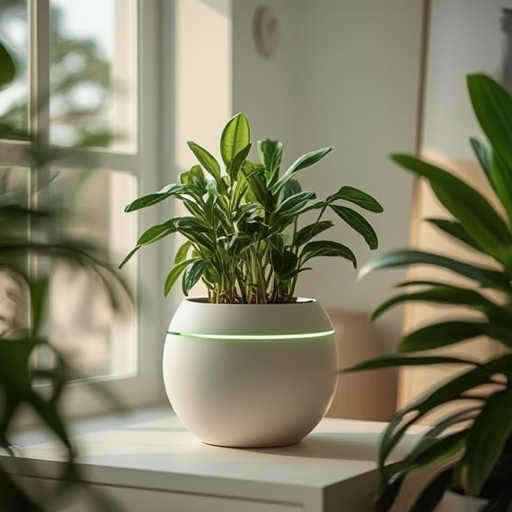
As someone who unabashedly fits the stereotype of a plant-collecting, book-devouring, socially reserved millennial who happens to write professionally about smart home technology, I find genuine delight in innovations like the LeafyPod. This intelligent planter seamlessly merges nature with technology by allowing plant enthusiasts to use their preferred potting soil and repot any plant that fits comfortably inside. Once established, it autonomously manages the bulk of plant care, significantly simplifying the process of keeping indoor greenery alive and thriving.
Take my personal experience as an example: my Dieffenbachia has now lived in the LeafyPod for nearly two months, and I’ve just refilled the internal water reservoir for the first time. That means the system’s design — complete with intuitive app support and months-long battery endurance — effectively turns plant ownership into a nearly hands-off experience while ensuring optimal plant health. With features like these, one might initially question the purpose of equipping a simple planter with Wi‑Fi capability. However, the LeafyPod demonstrates convincingly why network-enabled gardening can be genuinely transformative for modern households.
—
**Why a Smart Planter?**
When I experienced a serious accident that left me with fractured bones and confined to bed for almost an entire month, I realized just how indispensable a device like the LeafyPod could be. During that recovery period, I was unable to move freely or even stand for more than a few minutes, making plant care virtually impossible. Unsurprisingly, watering my familiar windowsill jungle dropped far down my list of priorities. The heartbreaking result was that most of my beloved plants — including around a hundred dollars’ worth of new additions purchased shortly before my injury — withered away. Astonishingly, the only plant that not only survived but flourished was the Dieffenbachia resting within its LeafyPod. A few resilient older specimens pulled through thanks to my children’s sporadic assistance, but none compared to the vigorous, healthy appearance of the plant maintained by the smart planter.
—
**How the LeafyPod Works**
Setting up the LeafyPod is refreshingly straightforward. I simply repotted my plant, added enough soil to secure the roots, and filled the built‑in water reservoir. The planter’s rechargeable power source eliminates any need to keep it plugged in continuously, offering both convenience and aesthetic freedom. After fully charging the device before placing it in its designated spot, I was impressed to see that the battery indicator had decreased by only one‑third after nearly two months of use.
Upon launching the companion app, users can register the specific plant species they’ve potted. The app then provides detailed insights into that plant’s preferred watering intervals, light levels, and environmental tolerances. Once connected, the LeafyPod employs adaptive intelligence to monitor temperature and humidity levels, assess ambient light exposure, and automatically adjust watering patterns to mimic optimal growing conditions. In essence, it learns the microclimate of your home and tailors hydration accordingly, offering just enough moisture for sustainable growth without the risk of over‑ or under‑watering.
To enable remote monitoring, a separate bridge device is required — a small hub that must stay plugged in at all times. Through this connection, users can view each planter’s status, track watering history, and receive notifications from anywhere. One bridge supports multiple LeafyPods (though the exact number isn’t specified by the company) and costs $48 individually, or it can be included in the discounted starter kit. The integrated app interface presents all relevant plant data neatly, including real‑time light measurement and a comprehensive watering log.
—
**ZDNET’s Buying Advice**
After comparing the LeafyPod with more agriculture‑oriented smart systems such as the Plantaform and Gardyn — models that rely on proprietary seed pods, specialized growing mediums, and frequent water refills ranging from weekly to triweekly — it’s clear that the LeafyPod occupies a distinct niche in the smart planter landscape. Whereas those systems cater to users interested in cultivating produce or hydroponic gardens, the LeafyPod offers a simpler, more accessible experience designed for everyday plant owners, especially beginners or self‑proclaimed “plant killers.”
Currently, the LeafyPod starter pack retails for $127, which includes both the planter and the bridge hub. Admittedly, this price exceeds that of a standard decorative pot, but its advanced automation, design sophistication, and intelligent maintenance capabilities more than justify the investment. My own circumstances have proven that even those with the worst track record of plant neglect can successfully rejuvenate their indoor greenery. With the LeafyPod handling hydration, monitoring light levels, and adapting care routines automatically, it becomes possible to enjoy flourishing houseplants without the stress or guilt of constant upkeep.
Sourse: https://www.zdnet.com/article/leafypod-smart-planter-review/


